
Don’t Let Your Hair Die Young with These Top Repair Treatments
Your Hair Is Crying Out — Here’s What Actually Helps
A damaged hair mask is the fastest, most effective way to restore broken, dry, or over-processed strands back to health. Here are the top options worth knowing about in April 2026:
Top Damaged Hair Masks at a Glance:
| Mask | Best For | Key Benefit |
|---|---|---|
| K18 Leave-In Molecular Repair | All damage types | Repairs polypeptide chains without rinsing |
| Briogeo Don’t Despair, Repair! | Dry, over-processed hair | 2x stronger hair after 3 uses |
| Olaplex No. 3 | Bleached or color-treated hair | Rebuilds broken bonds |
| CRISTALBOX Keratin Mask | Dry, color-treated hair | Deep moisture + keratin repair (4.4 stars, 7,695 ratings) |
| DIY Avocado + Coconut Oil | Budget-friendly repair | Natural vitamins, fatty acids, deep hydration |
Let’s be honest — heat tools, bleach, and everyday styling take a serious toll on your hair. Over time, the outer layer of each strand (the cuticle) gets roughed up, leaving hair that looks dull, feels brittle, and breaks way too easily.
Sound familiar?
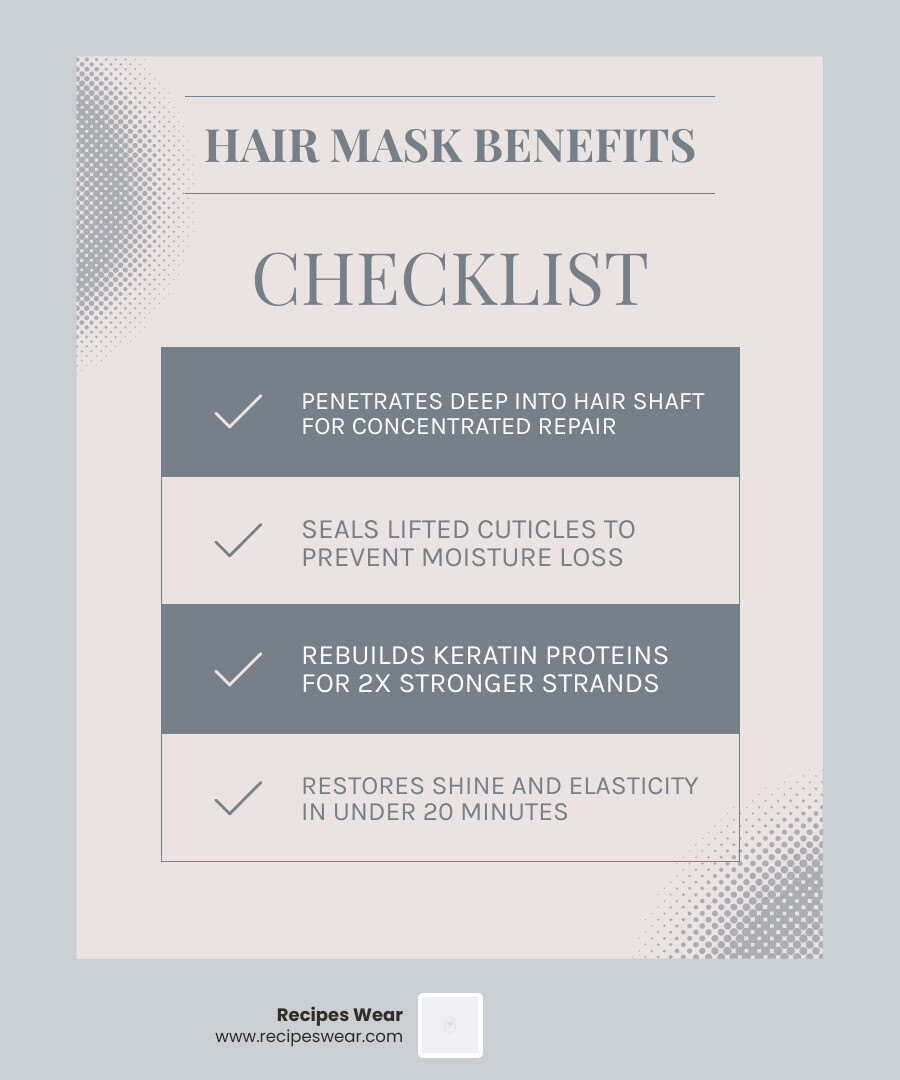
Unlike a regular conditioner, a hair mask goes deeper. It delivers concentrated ingredients — proteins, oils, and bond-building actives — directly into the hair shaft. The result? Softer, stronger, shinier hair, often in under 20 minutes.
Whether you want a science-backed salon product or a simple kitchen recipe, there’s a repair treatment that fits your life and your budget.
The Science of Strands: Why You Need a Damaged Hair Mask
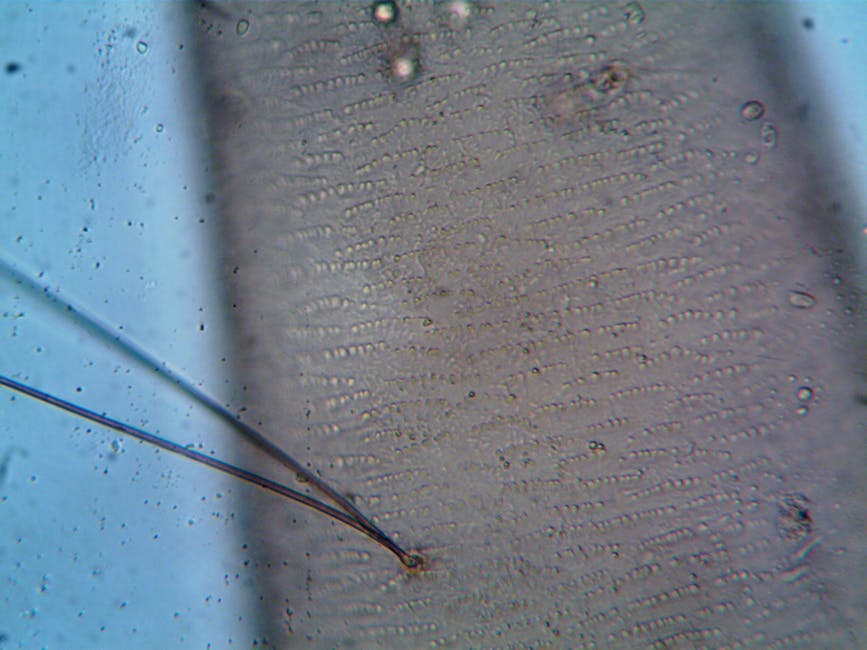
To understand why a damaged hair mask is non-negotiable for hair health, we have to look under the microscope. Each hair strand is made of three layers: the medulla (the core), the cortex (the middle layer that holds pigment and strength), and the cuticle (the protective outer “shingles”).
When we use high heat, harsh bleaches, or even just brush too aggressively, those cuticle shingles lift and break. This exposes the cortex, leading to moisture loss and the breakdown of keratin—the protein that gives your hair its structure.
Modern hair masks are engineered to do more than just sit on top of the hair. Advanced bond-building technology and molecular repair systems use amino acids and peptides to penetrate the shaft. These ingredients find the broken polypeptide chains and “re-glue” them together. By sealing the cuticle, a mask locks in hydration and restores the protein-moisture balance. This doesn’t just make your hair look shiny for a day; it actually increases its resistance to future environmental stressors.
Top Professional Repair Treatments for April 2026
As of April 2026, the market for hair repair has shifted from simple “moisturizers” to high-tech “restorers.” Choosing the right one depends on whether your hair needs a molecular reset, a protein boost, or intensive hydration.
| Technology Type | Key Ingredients | Best For |
|---|---|---|
| Molecular Repair | Peptides, K18Peptide™ | Severe chemical/heat damage |
| Bond Building | Bis-Aminopropyl Diglycol Dimaleate | Bleached and color-treated hair |
| Keratin-Based | Hydrolyzed Keratin, Amino Acids | Frizzy, weak, or brittle hair |
| Botanical Hydration | Shea Butter, Argan Oil, Algae | Dry, dull, or environmental damage |
Choosing the Best Damaged Hair Mask for Bleached Strands
Bleached hair is uniquely fragile because the chemicals used to strip color also strip the hair’s natural lipids and break its internal bonds. For these over-processed locks, look for bond multipliers. Brands like Olaplex have become industry staples because they specifically target the disulfide bonds that give hair its elasticity.
If you are dealing with yellowing or brassiness alongside damage, some masks now include violet pigments to tone while they treat. The goal for bleached hair is always the same: restore the “snap-back” quality (elasticity) so your hair doesn’t feel like wet gummy bears when it’s washed.
High-Protein vs. Moisture-Heavy Formulas
How do you know what your hair needs? We like to use the “Stretch Test.”
- Gummy/Stretchy: If your hair feels mushy or stretches and doesn’t return to its shape, you need a high-protein mask. Look for ingredients like hydrolyzed wheat protein, biotin, or keratin.
- Brittle/Snap-Off: If your hair feels like straw and snaps instantly, you need moisture. Look for mango butter, tucuma butter, algae extract, and rosehip oil.
Briogeo’s “Don’t Despair, Repair!” is a 15-time award winner precisely because it balances both, making it a safe bet for most people. Meanwhile, the Ultimate Repair Mask For Damaged Hair | Wella Professionals US uses AHA and Omega-9 to rebuild the hair inside and out in just 90 seconds—perfect for those of us who are always in a rush!
Kitchen Cures: Effective DIY Recipes for Hair Health
At Recipes Wear, we believe that some of the best “recipes that dress your creativity” come straight from your pantry. While professional masks offer high-tech molecules, nature provides raw fatty acids and vitamins that can do wonders for a parched mane.

- Coconut Oil: This is a “magical ingredient” because its fatty acids can actually penetrate the hair shaft more deeply than many synthetic conditioners. It’s excellent for preventing protein loss.
- Avocado: Loaded with nearly 20 different vitamins and minerals, avocado helps repair damaged cells and provides a natural shield against heat.
- Honey: A natural humectant, honey pulls moisture from the air and binds it to your hair.
- Yogurt & Eggs: These provide the lactic acid and protein needed to fix dullness and strengthen the hair structure.
- Cinnamon: This isn’t just for flavor! Cinnamon stimulates the scalp, improving circulation to encourage new, healthy growth.
Crafting a DIY Damaged Hair Mask at Home
Ready to play “hair chef”? Here is one of our favorite signature Recipes Wear blends for intense repair:
The “Green Goddess” Repair Mask:
- Mash one ripe avocado until completely smooth (no lumps, or they’ll be hard to rinse out!).
- Mix in 2 tablespoons of coconut oil and 1 tablespoon of honey.
- Add one egg for a protein boost.
- Apply from ends to roots.
- Pop on a shower cap and wait 20 minutes.
- Rinse with cool water (warm water can “cook” the egg in your hair—definitely not the look we’re going for!).
For those looking for a more “citrusy” vibe, strawberries are great for adding shine due to their high Vitamin C content. Simply blend 6-8 strawberries with coconut oil and honey for a 10-minute “glow-up” treatment.
Master the Application: How to Use Your Mask for Maximum Results
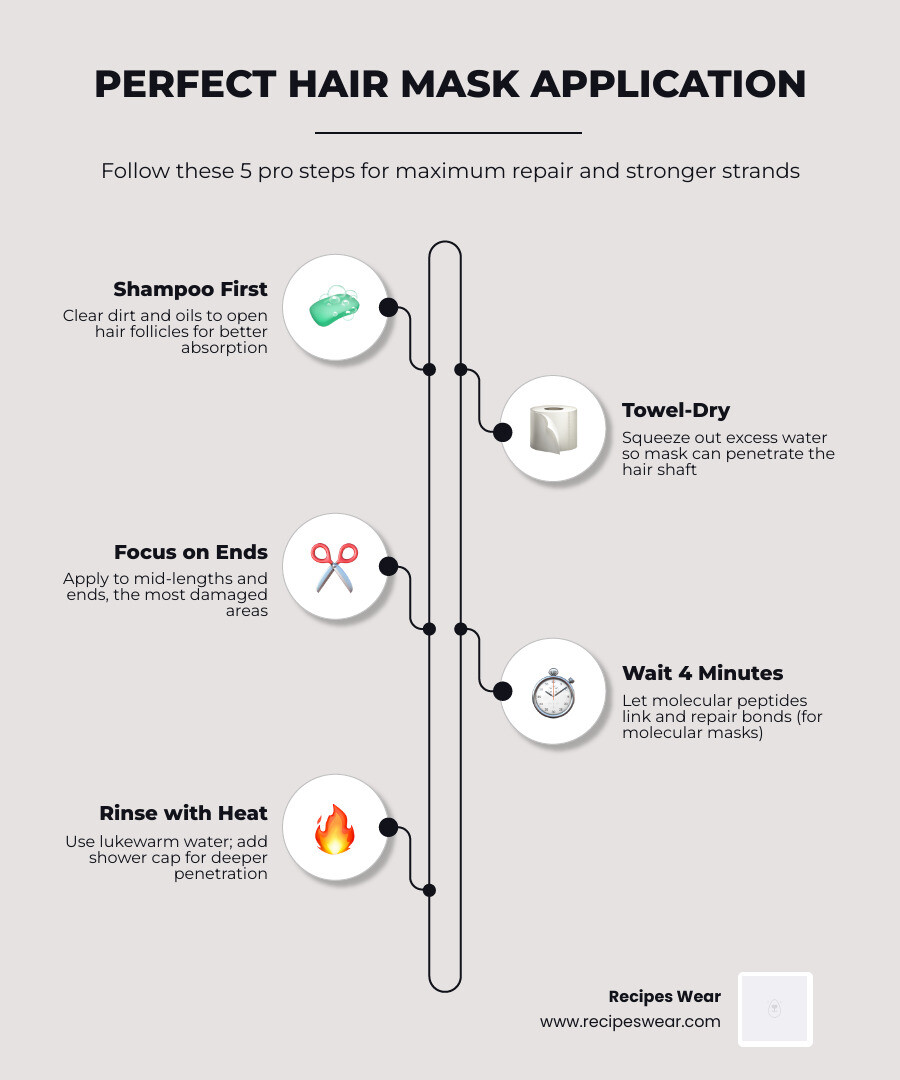
You could buy the most expensive damaged hair mask in the world, but if you apply it incorrectly, you’re literally washing money down the drain. To get the most out of your treatment, follow our pro-level steps.
How to Apply Your Damaged Hair Mask for Maximum Repair
- Shampoo First: You need to clear away dirt and oils so the mask can actually reach the hair. Shampooing also helps open the hair follicles.
- Towel-Dry: If your hair is dripping wet, the water fills up the hair shaft, leaving no room for the mask to enter. Gently squeeze out excess water until hair is damp.
- Focus on the Ends: Your scalp produces natural oils (sebum), so the hair near your roots is usually healthy. Focus the mask on the mid-lengths to the ends, which are the oldest and most damaged parts of your hair.
- The 4-Minute Rule: If you are using a molecular mask like K18, you must wait 4 minutes before applying any other products or styling. This gives the peptides time to link up.
- Add Heat: For traditional masks, wearing a plastic shower cap or wrapping a warm towel around your head helps the cuticle stay open, allowing for deeper penetration.
- Rinse with Care: Most masks should be rinsed thoroughly with lukewarm water. However, some luxury options like the Absolut Repair Lipidium Hair Mask – L’Oréal Professionnel can even be used as a pre-shampoo treatment for thick, coily hair.
Frequently Asked Questions about Hair Restoration
How often should I use a mask on severely damaged hair?
In April 2026, the general consensus among stylists is once a week. However, if your hair is severely bleached or “gummy,” you might benefit from twice-weekly sessions. Just be careful—overusing protein-heavy masks can lead to “hygral fatigue” or make hair feel stiff. If your hair starts feeling weighed down or greasy, scale back to once every two weeks.
Can a hair mask fix split ends permanently?
The honest answer? No. Once a hair fiber has split at the end, the only permanent “cure” is a haircut. However, a high-quality damaged hair mask can temporarily seal the cuticle and smooth the split, making it less visible and preventing the split from traveling further up the hair shaft. Think of it as a very effective bandage while you wait for your next trim.
Is it better to apply a mask to wet or dry hair?
Most masks are designed for damp, post-shampoo hair because the “open” cuticle allows for better absorption. However, some oil-based DIY treatments work beautifully on dry hair as a pre-wash treatment. Always check the label. For example, Function of Beauty’s Custom Repair Mask is designed specifically as a rinse-out mask to be used in place of your conditioner.
Conclusion
Your hair is an extension of your creativity, and it deserves to live a long, vibrant life. Whether you choose a high-performance option like the RebuildM+ Hair Mask – Oway Organic Hair Care or a simple avocado blend from your kitchen, consistency is the key to the healthy hair journey.
Don’t wait until your strands are “dying young”—start a weekly ritual today. For more beauty recipes, makeup tutorials, and creative tips that dress your style, visit us at Recipes Wear. Remember: healthy hair isn’t just about the products you use; it’s about the love and “recipes” you put into your routine.
Stay creative, stay beautiful, and let your hair shine all through 2026 and beyond!

