
Corretivo perfeito existe e nós vamos te ajudar a encontrar
Why choosing the right concealer makes all the difference in your makeup
How to choose concealer might seem simple — but anyone who has ever come home with the wrong shade knows it’s not quite like that.
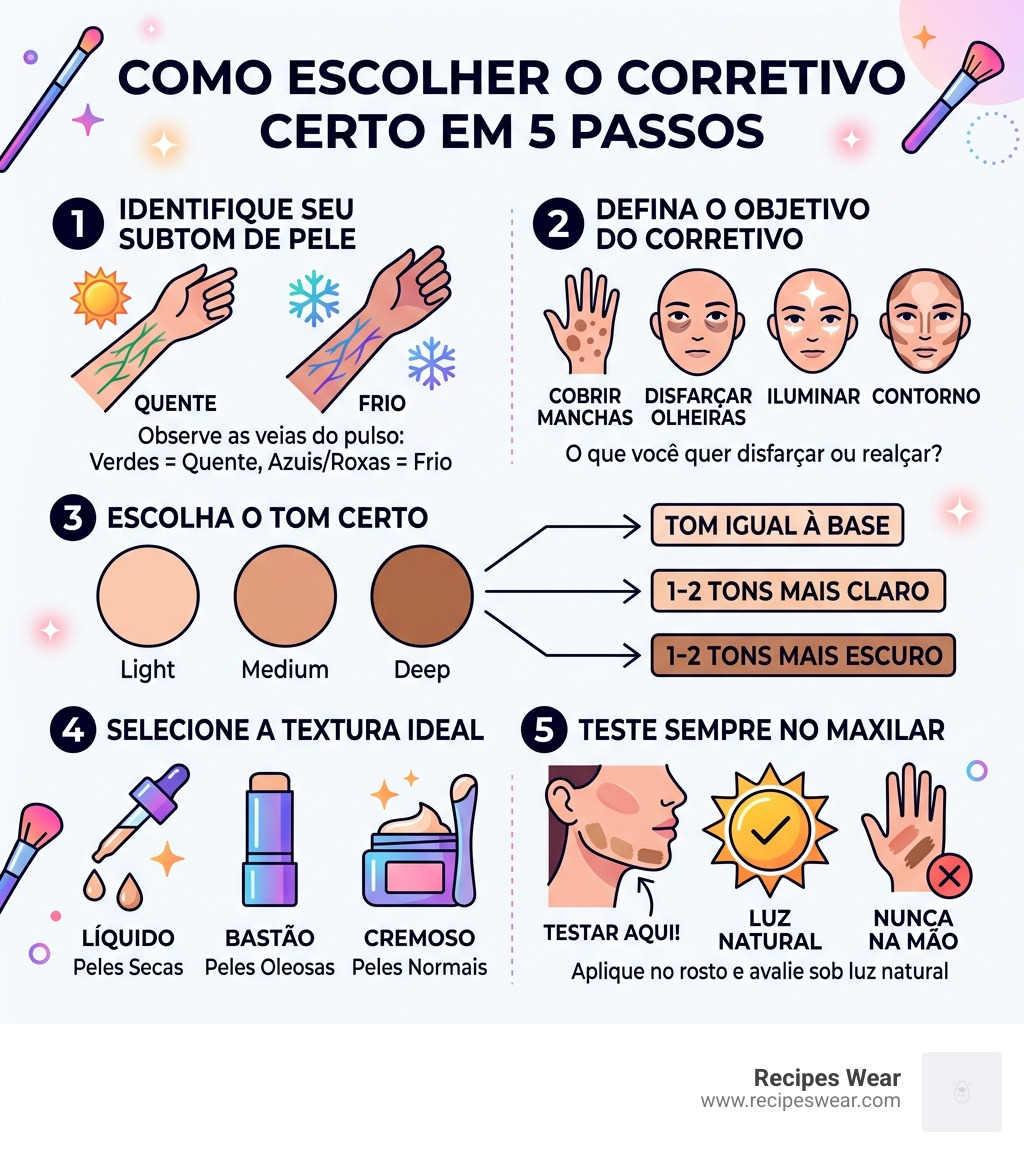
Quick answer: how to choose concealer in 5 steps
- Identify your skin undertone — look at your wrist veins: green indicates a warm undertone, blue/purple indicates a cool undertone
- Define the goal — cover spots, disguise dark circles, highlight, or contour
- Choose the right shade — same as your foundation to cover imperfections, 1-2 shades lighter to highlight, 1-2 shades darker for contouring
- Select the texture — liquid for dry skin, stick for oily skin, creamy for normal skin
- Test on the jawline, never on your hand — and always in natural light
Concealer is one of the most versatile makeup products. It covers dark circles, hides pimples, highlights strategic points on the face, and even helps with contouring. But when the choice is wrong, the effect can be the opposite of what’s desired — drawing attention to exactly what you wanted to hide.
The good news? With some simple concepts of color theory and a quick test on your face, you can find the ideal concealer for your skin — without needing a makeup course.
In this guide, Recipes Wear will show you everything: textures, shades, undertones, application techniques, and the most common mistakes to avoid.
How to choose concealer: the ultimate guide by skin type and texture
The journey to discovering how to choose concealer starts with texture. It’s no use getting the color right if the product “fights” with your skin’s nature. Concealer has a higher concentration of pigments than foundation, which makes it denser and more efficient for camouflage. However, this density requires attention to the finish.
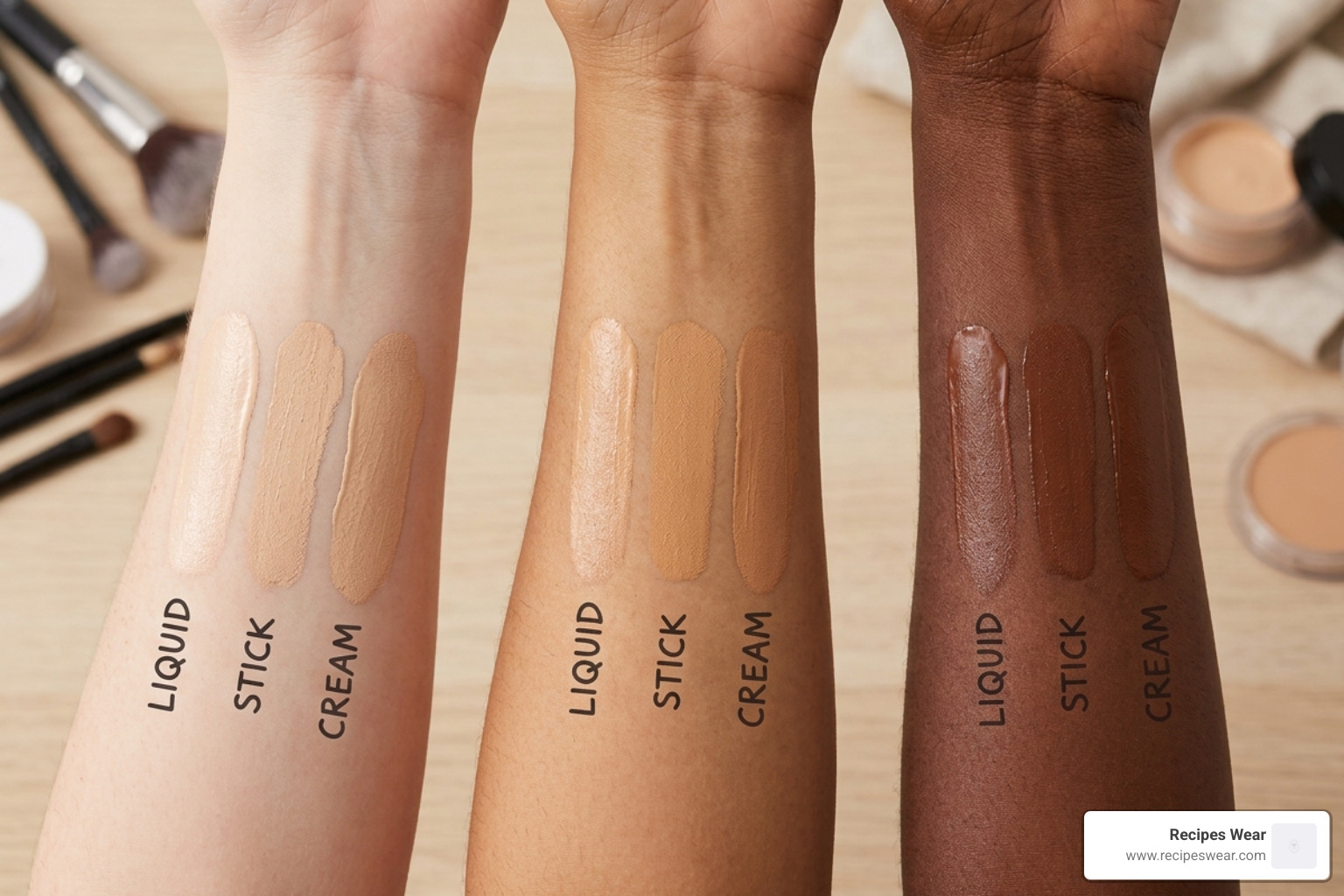
There are four main textures on the market:
- Liquid Concealer: The most popular and versatile. It offers everything from light to high coverage, adapting well to almost all skin types. Being more fluid, it’s ideal for the eye area as it tends to settle less into fine lines.
- Stick Concealer: Has high pigmentation and a drier, firmer consistency. It’s excellent for covering specific spots, acne, or even tattoos. Because it’s denser, it requires care during application so as not to look heavy.
- Cream Concealer: Offers medium to high coverage and is usually more hydrating than the stick. It’s great for those who need intense camouflage on larger areas of the face.
- Powder Concealer: Less common for heavy correction, but excellent for finishing or for those seeking a very subtle and natural finish on extremely oily skin.
How to choose concealer for oily and combination skin
If your skin tends to shine throughout the day, the secret is to look for oil-free formulas with a matte finish. Oily skin has a greater tendency to “melt” makeup, so long-wear concealers are essential.
A common mistake is using very creamy products that can clog pores or cause the product to turn yellow due to oxidation accelerated by natural oiliness. Stick concealers with a dry touch or liquids with a matte effect are the best choices to ensure staying power.
How to choose concealer for dry and mature skin
For those with drier or mature skin, the focus should be on hydration. Formulas rich in hyaluronic acid, niacinamide, or vitamin E are powerful allies. The fluid and hydrating texture prevents the dreaded creasing — that effect where the concealer “cracks” and highlights expression lines.
Avoid excessively dry or matte products in the dark circle area, as they can suck the little moisture from the skin, leaving the look heavy and aged. The ideal here is a luminous or satin finish, which reflects light and brings a rested appearance.
Color theory: neutralizing dark circles and spots with color correctors
Sometimes, just a skin-toned concealer isn’t enough. If you apply a light shade directly over very dark circles, the result can be a grayish tone. This is where the magic of the color wheel and complementary colors comes in. Understanding color theory is essential for professional-level results.
| Concealer Color | What it neutralizes | Ideal for |
|---|---|---|
| Green | Red | Inflamed acne, rosacea, and reddish scars |
| Yellow | Purple | Purplish dark circles and small bruises |
| Salmon/Orange | Blue/Gray | Bluish dark circles on light skin (salmon) or dark skin (orange) |
| Lilac | Yellow/Brown | Yellowish spots, freckles, or melasma in warm tones |
Using yellow and green concealer
Green concealer is a lifesaver for those suffering from very red pimples or rosacea. Since green is opposite to red on the color wheel, it cancels out the unwanted color instantly.
Meanwhile, yellow concealer is perfect for neutralizing purple dark circles. It evens out the skin tone before you apply foundation or a concealer of your exact shade, creating a neutral canvas.
Using salmon and lilac concealer
Salmon concealer (or peach) is a favorite among professional makeup artists. It’s excellent for neutralizing bluish and grayish tones under the eyes, common in deep dark circles. On dark skin, a more vibrant orange tone works better to correct hyperpigmentation and give the face a healthy look.
Lilac is used to neutralize brownish or yellowish spots, helping to brighten areas that look “dull” or lifeless.
Finding the ideal shade and undertone for every skin
Learning how to choose concealer requires you to know your undertone. The tone is what we see immediately (fair, medium, dark), but the undertone is the nuance beneath the skin: warm, cool, neutral, or olive.
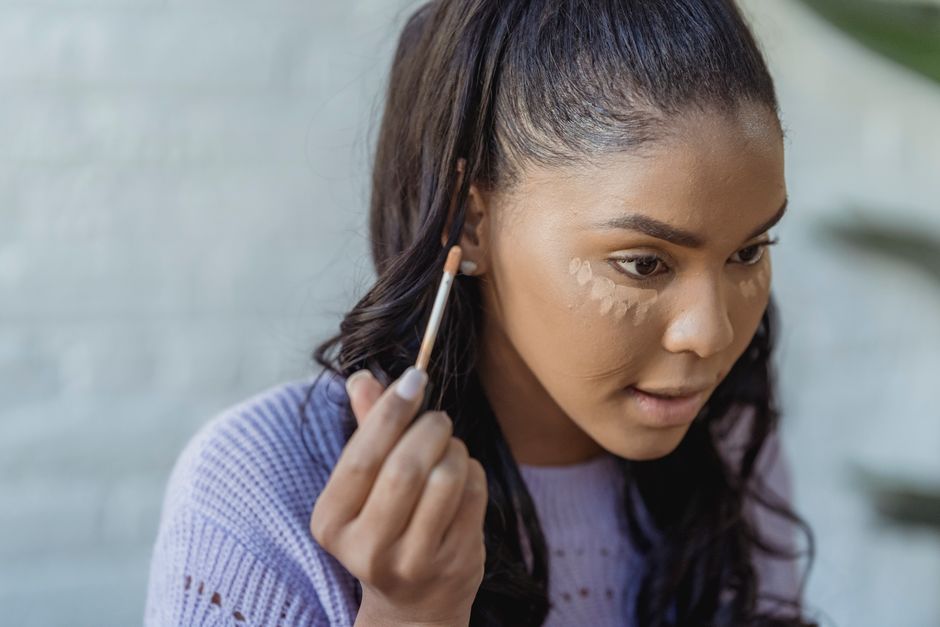
- Warm Undertone: Skin with a yellowish or golden base. Wrist veins tend to be green.
- Cool Undertone: Skin with a pinkish or reddish base. Wrist veins look blue or purple.
- Neutral Undertone: A balance between the previous two.
- Olive Undertone: Skin with a slightly greenish or grayish base, very common in medium and light skins that tan easily.
Shade adjustment for highlighting and contouring
Concealer isn’t just for hiding; it’s for sculpting!
- To Highlight (Strobing): Choose a product one to two shades lighter than your skin. Apply to the center of the forehead, bridge of the nose, cupid’s bow, and in the triangle below the eyes.
- To Contour: Choose a concealer two shades darker. Apply below the cheekbones, on the temples, and along the jawline to create depth.
How to test the color correctly
Forget testing on your wrist or the back of your hand! The skin color in those areas is different from your face. The correct place to test is on the jawline, between the face and the neck.
Always look for natural light to validate the color. Store lights can be deceiving, making the product look lighter or more yellow than it really is. Another vital point: wait for the product to dry. Many concealers undergo oxidation, which means they darken slightly after contact with the air.
Step-by-step for a flawless application without creasing
Perfect skin doesn’t just depend on the product, but on how you prepare it.
- Cleaning and Hydration: Never skip hydration, especially in the eye area. Dehydrated skin “drinks” the water from the concealer, causing creasing.
- Primer: Use a primer to smooth the texture of pores and help with staying power.
- Foundation First: In most cases, apply foundation first to even out the tone. This way, you’ll use less concealer, avoiding product buildup.
- Application: Use your ring finger (which has the lightest touch), a damp sponge, or a precision brush. The secret is to dab and never drag the product, so as not to remove the coverage.
- Setting: Finish with a very fine translucent powder to “set” the concealer, ensuring it doesn’t move into expression lines throughout the day.
Common mistakes when applying concealer
- Reverse Panda Effect: Using a concealer that is too light, leaving a white “target” around the eyes.
- Excess Product: Thinking that more concealer means more coverage. In fact, thin, well-blended layers are much more effective.
- Forgetting the Undertone: Using a pinkish concealer on yellowish skin, resulting in an artificial and grayish look.
Frequently asked questions about how to choose concealer
Should concealer be lighter or the same shade as the foundation?
It depends on the goal! To correct spots and pimples, it should be exactly the same shade as your foundation to “disappear” into the skin. To brighten the dark circle area, it can be 1 shade lighter, bringing light to your gaze.
What is the best way to hide very deep dark circles?
The secret is building layers. Start with a color corrector (salmon or orange) to neutralize the dark pigmentation. Then, apply a concealer that matches your skin tone. Use the inverted triangle technique below the eyes to spread the light evenly.
Should I apply concealer before or after foundation?
If you are using color correctors (green, lilac), apply them before foundation. If you are using concealer just to highlight or finish, apply it after foundation. This ensures a more professional finish and avoids product waste.
Conclusion
Mastering the art of how to choose concealer is a game-changer in your beauty routine. It’s not just about hiding what bothers us, but about enhancing our confidence and creativity. At Recipes Wear, we believe that makeup is a unique recipe for each person, where the ingredients are the products and the technique is your personal touch.
Experiment, test different textures under sunlight, and don’t be afraid to mix two shades to reach the perfect color. After all, beauty is about feeling good in your own skin.
Access more beauty tips on our portal

