
Técnicas infalíveis para aplicar blush líquido e em pó
How to apply blush and achieve an incredible natural look
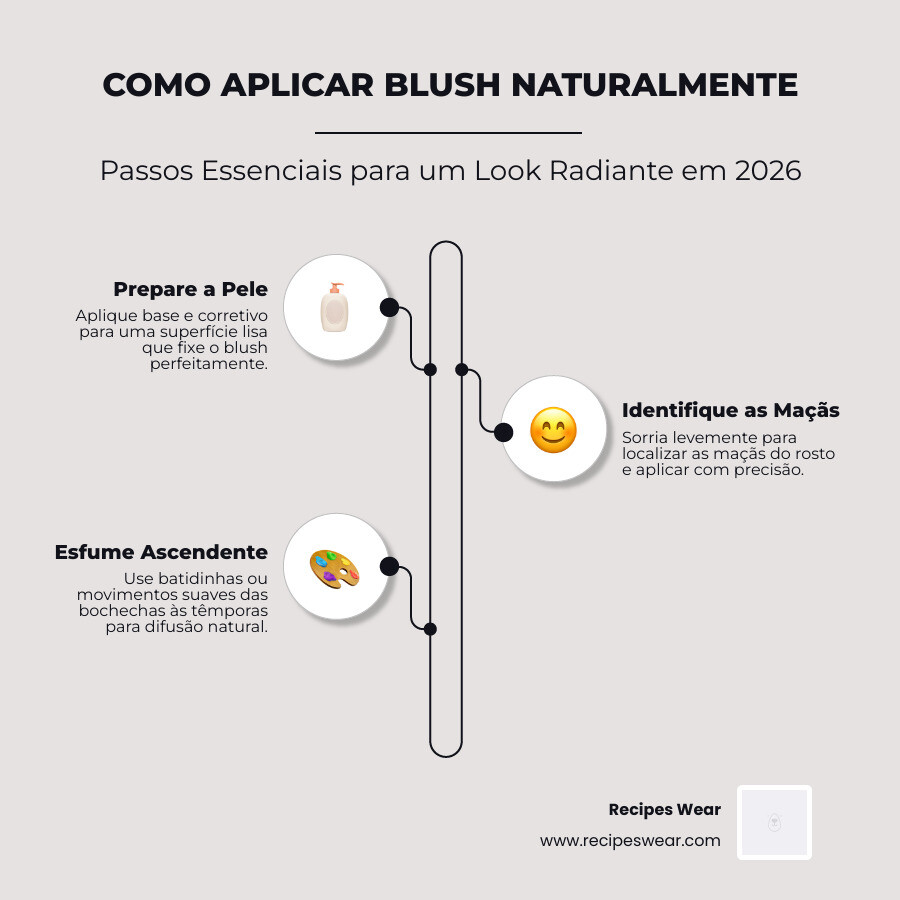
How to apply blush correctly completely transforms your look — and it’s simpler than it seems. Here is the basic method for a natural and radiant result:
- Prepare the skin with foundation and concealer before the blush
- Smile slightly to identify the apples of your cheeks
- Apply a small amount of product and build the intensity gradually
- Blend in upward motions from the apples towards the temples
- Finish with translucent powder or setting spray for longer wear
It’s that simple. But if you want to master the techniques, choose the right shade, and avoid the most common mistakes — keep reading.
Blush is one of the most powerful products in makeup. That touch of color on the cheeks completely changes the face’s expression in seconds. It adds vitality, creates freshness, and gives dimension to the face in a way that few products can.
The problem? Most people apply it wrong. Too much product, wrong placement, no blending — and the result looks artificial.
The good news is that with the right techniques, anyone can achieve a professional and natural finish. Whether with powder, cream, or liquid blush, the logic is the same: less is more, and diffusion is everything.
What is blush and how to choose the ideal formula for your skin
We know the makeup universe can seem intimidating with so many options, but blush (or rouge) has an essential function: to simulate the natural blood circulation of the face. You know that healthy glow we have after a walk or a spinning class? That’s exactly what we’re looking for. In 2026, the trend is the “real look,” where the blush melts into the skin instead of sitting on top of it.
To learn how to apply blush masterfully, the first step is choosing the right texture for your skin type:
- Powder blush: The classic. Ideal for those with oily or combination skin, as it helps control shine and offers a matte finish. Its durability is excellent, but care is needed not to mark expression lines.
- Cream blush: Perfect for dry skin. It usually contains moisturizing ingredients that nourish the skin while providing color. The result is a dewy effect (luminous) and very natural.
- Liquid blush: The big star of the moment. It offers high pigmentation and total fusion with the skin. It’s ideal for those seeking a “second skin” effect, but it dries quickly, so agility in application is fundamental.
If you want to better understand the textures used in makeup products, the overview on cosmetics can help contextualize how different formulas behave on the skin.
The Recipes Wear Guide for the perfect look suggests that you also consider the occasion. For long events, layering textures (liquid underneath and powder on top) ensures unbeatable durability.
Color guide: The perfect shade for every skin undertone
Getting the color right is half the battle for a harmonious look. It’s not just about liking a pink or coral; applied colorimetry helps enhance your natural beauty without creating heavy contrasts.
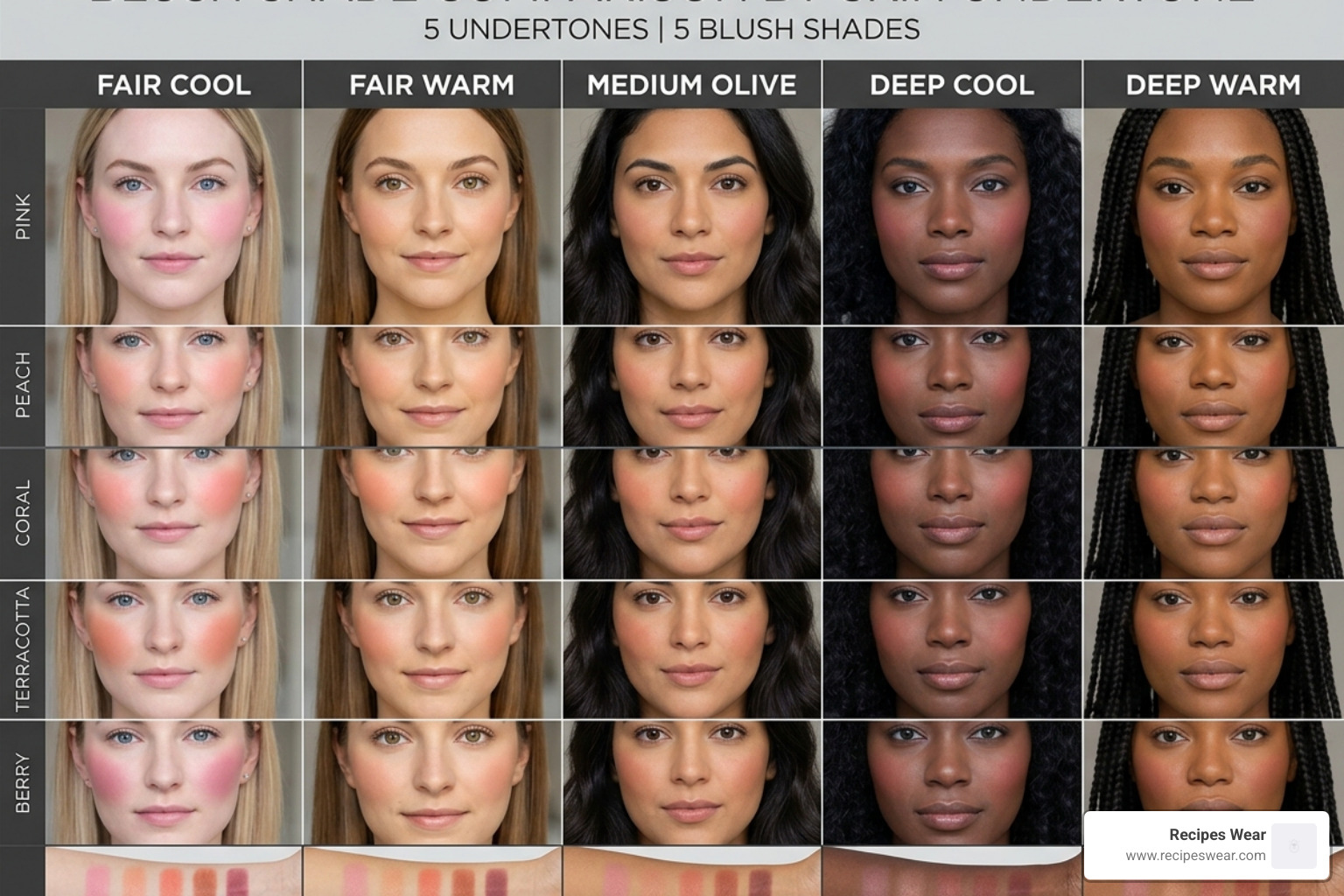
- Fair skin: If you have a cool undertone, pastel pink or “bubblegum” shades are ideal. For warm or neutral undertones, peach and melon tones bring immediate freshness.
- Medium skin: Medium skin tones shine with vibrant corals, mauves, and dusty rose tones. If the skin has a yellowish undertone, bronzed tones work as both blush and bronzer.
- Dark skin: Requires intense pigmentation to avoid looking ashy. Bet on brick tones, terracotta, deep wines, or even vibrant reds. The result on dark skin is spectacular and luxurious.
An essential tip on where to apply blush is to observe how your face naturally behaves when you are flushed. The goal is to mimic that color, staying at most two or three shades above your natural color.
Step by step: How to apply blush for a natural finish
Skin preparation is the secret of professional makeup artists. Applying blush on dry or flaky skin will highlight imperfections. Always start with a moisturizer or primer. In the makeup order, blush usually comes after foundation and concealer, but before highlighter.
The golden rule is: gradual layers. It is much easier to add color than to remove the excess. The perfect blend is one where you can’t see where the blush starts and where it ends.
How to apply liquid blush with fingers or a sponge
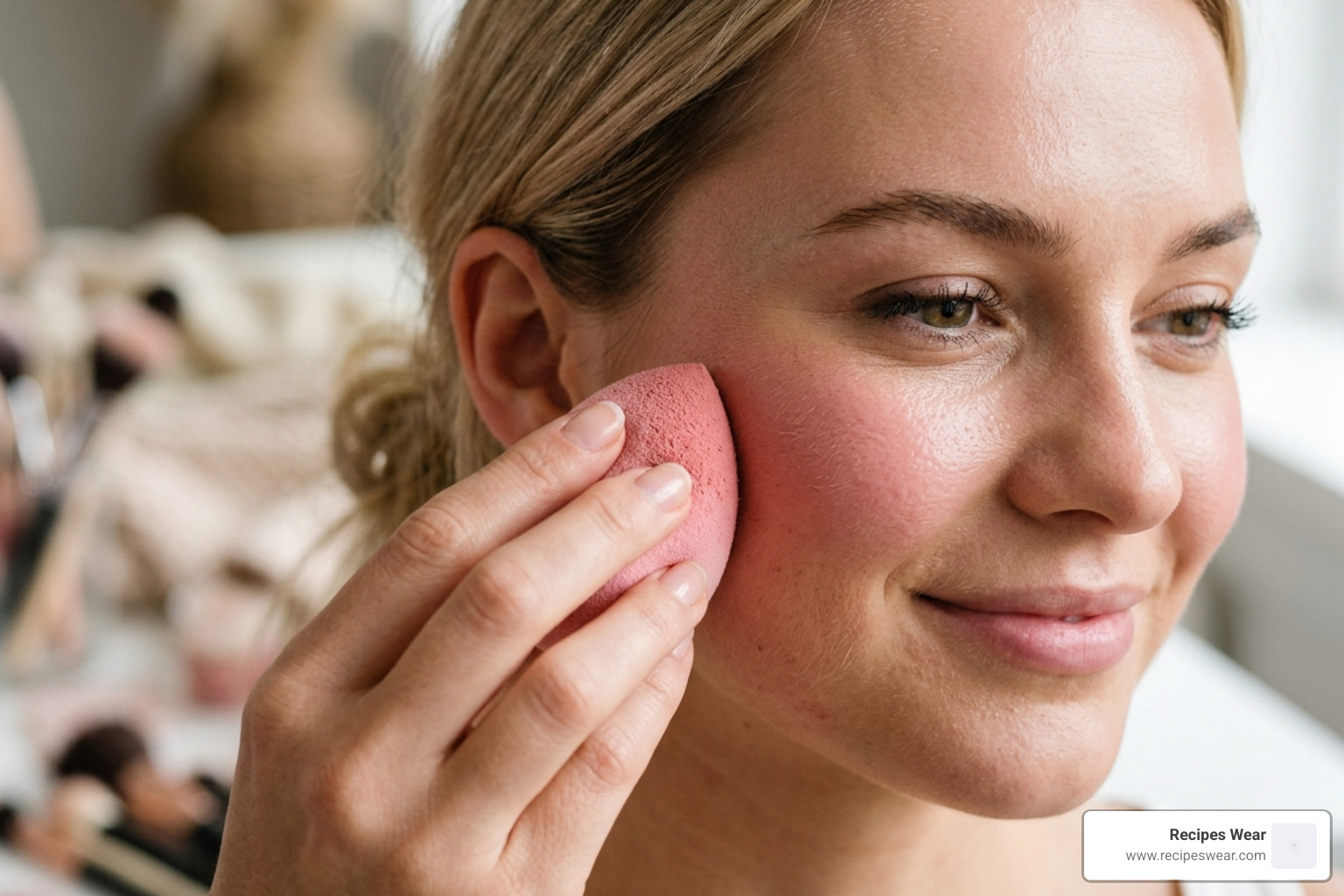
Liquid blush benefits from skin warmth. We recommend applying three small dots on the apples and using your fingers to give light taps. This stimulates natural circulation and helps in the total fusion of the product. If you prefer a damp sponge, use the “tapping” method to ensure the product doesn’t streak. The result is a radiant second skin effect.
How to apply powder blush with the correct brush
For powder, use a medium-sized fluffy brush. Removing excess (tapping the brush handle before bringing it to the face) is mandatory. Start at the apples of the cheeks and make upward movements towards the temples. This helps integrate the blush with the rest of the makeup and avoids the “ball” effect in the center of the face.
Application techniques according to face shape and 2026 trends
In 2026, blush has moved from being just a detail to becoming the protagonist of modern makeup. The way you position the product can alter the perception of your features.
- Oval Face: Apply to the apples and blend slightly outwards. It is the most balanced shape.
- Round Face: To create a lifting effect, apply the blush a bit higher, above the apples, and go up towards the temples. Avoid the center of the cheeks to not emphasize width.
- Square Face: Focus on the apples of the face with soft circular motions to soften the angles of the jaw.
- Sunkissed Technique: Apply blush in a W shape, passing through the cheeks and across the bridge of the nose. It’s the favorite look for summer.
- Boyfriend Blush: A trend that seeks a more “effortless” and natural look, applying blush a bit lower on the cheeks, horizontally.
- Draping: A technique inspired by the 90s that uses blush to sculpt the face, replacing traditional contouring.
- Monochromatic Style: Use the same shade of blush on the cheeks, eyelids, and lips. This creates a sophisticated and quick-to-do visual harmony.
By understanding your face shape, you can adapt these techniques to highlight your best features and stay on trend with the latest beauty aesthetics.
Common mistakes and how to make blush last all day
The most serious mistake is excess product. If you overdid it, don’t panic: take the brush or sponge you used for foundation (without adding more product) and tap over the blush to soften the harsh lines.
For the blush to last all day, the layering technique is your best friend:
- Apply a cream or liquid blush.
- Do a light sealing with translucent powder.
- Apply a thin layer of powder blush on top.
This creates a color barrier that resists sweat and touch. Always finish with a setting spray to “melt” the powder layers and return the look of real skin.
Frequently Asked Questions about Blush
Can I use blush on my nose, eyes, and lips?
Yes! Multifunctionality is one of the greatest virtues of this product. Applying a bit of blush on the tip of the nose helps create the sunkissed effect and unites the look. Using it on the eyes ensures an incredible chromatic harmony, and on the lips (especially cream versions), it creates a natural “tint” that lasts for hours. It is the basis of the monochromatic technique.
What is the difference between blush, bronzer, and highlighter?
Although they can be used together, they have distinct functions:
- Bronzer: Brings warmth to the skin and depth, simulating a tan. It is used for light contouring.
- Blush: Brings color and vitality (the “freshness”).
- Highlighter: Creates points of light on the high parts of the face (top of the cheekbones, cupid’s bow).
Should blush be applied before or after translucent powder?
It depends on the texture. Liquid and cream textures should ALWAYS come before the powder, so they can adhere to the skin. If you apply liquid over powder, the makeup can “break” and become patchy. On the other hand, powder textures should be applied after translucent powder for a velvety finish and easier blending. The order of factors here totally changes the final result.
Conclusion
Mastering the art of how to apply blush is an invitation to explore your creativity in beauty. At Recipes Wear, we believe that makeup should not have rigid rules, but rather “recipes” that you can adapt to express who you are. Whether it’s a sophisticated lifting effect or a relaxed sunkissed look, blush is your tool to shine.
Remember: the best blush is the one that makes you feel confident. Experiment with different techniques, mix colors, and have fun with the process. After all, beauty is a form of art that we wear every day.
Discover more beauty tips at Recipes Wear

