
The Best Skin Care Cream for Dry Skin That Actually Works
Why Your Skin Stays Dry — and How the Right Cream Changes Everything
The best skin care cream for dry skin can make a real difference between skin that feels tight and flaky all day and skin that stays soft and comfortable for hours.
Here are the top picks to know right away:
| Product | Best For | Key Feature |
|---|---|---|
| CeraVe Moisturizing Cream | Overall dry skin | 72-hour hydration, ceramides, 131K+ reviews |
| Aquaphor Healing Ointment | Very dry or cracked skin | Occlusive barrier, 90K+ reviews, #1 rated |
| La Roche-Posay Lipikar AP+ | Sensitive & eczema-prone | Triple repair formula, 32K+ reviews |
| First Aid Beauty Ultra Repair Cream | Eczema & redness | Colloidal oatmeal, barrier repair in 7 days |
| Cetaphil Intensive Moisturizing Cream | Daily face & body use | 48-hour hydration, niacinamide + panthenol |
| La Mer Crème de La Mer | Luxury anti-aging | Advanced moisture-lock, bestseller at Bluemercury |
| Kiehl’s Ultra Facial Cream | Everyday facial hydration | Award-winning, lightweight yet rich |
Dry skin is incredibly common. It can feel tight, itchy, or rough. In more severe cases, it cracks and even bleeds.
And here’s the frustrating part: many people moisturize regularly but still struggle with dryness. The wrong formula — one with too much water, alcohol, or fragrance — can actually make things worse.
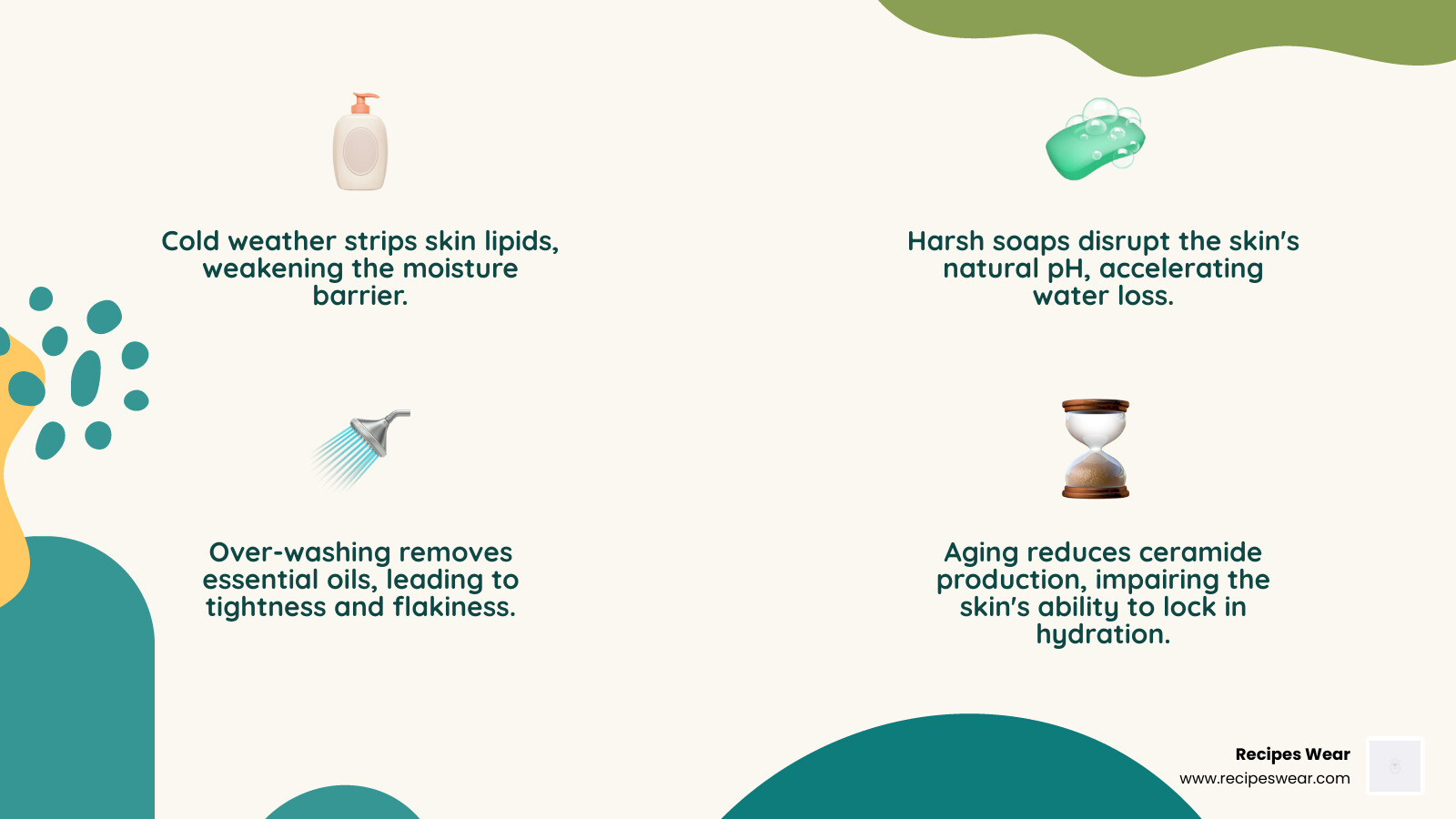
The skin has a natural moisture barrier. When that barrier gets damaged — by cold weather, harsh soaps, over-washing, or aging — water escapes faster than your skin can hold onto it. That’s when you need a cream that doesn’t just sit on top, but actively rebuilds what’s been lost.
The good news? With over 7,000 moisturizing creams available and products backed by hundreds of thousands of real customer reviews, there are solid, proven options for every skin type and budget.
The Best Skin Care Cream for Dry Skin: Essential Ingredients
When we look for the best skin care cream for dry skin, we aren’t just looking for a thick texture. We are looking for a specific “recipe” of ingredients that work together to mimic the skin’s natural functions. Dermatologists often categorize these into three main groups: humectants, occlusives, and emollients.
The Big Three: Humectants, Occlusives, and Emollients
To truly fix dryness, a cream needs to do three things: pull water in, smooth the surface, and lock everything down.
- Humectants (The Water Magnets): Ingredients like hyaluronic acid, glycerin, and urea are superstars. They draw moisture from the air or the deeper layers of your skin into the top layer.
- Occlusives (The Sealants): Think of these as the “lid” on your skin. Ingredients like petrolatum (found in Aquaphor), dimethicone, and squalane create a physical barrier that prevents water from evaporating.
- Emollients (The Smoothers): These fill in the tiny “potholes” between skin cells. Shea butter and safflower seed oil are excellent emollients that make your skin feel velvety soft.
The Barrier Builders: Ceramides and Niacinamide
About 50% of your skin’s outer layer is made of ceramides. These are lipids that act like the “mortar” between your skin cell “bricks.” As we head into April 2026, the most effective creams are those that replenish these natural fats. Niacinamide (Vitamin B3) is another favorite of ours; it helps the skin produce more of its own ceramides while soothing redness.
For those with extremely distressed skin, colloidal oatmeal is a must-have. It is an FDA-approved skin protectant that specifically targets itchiness and inflammation. If you want to dive deeper into how to match these ingredients to your specific needs, check out this guide on Choosing the Best Moisturizer for Dry Skin.
Top-Rated Formulations for Extremely Dry Skin
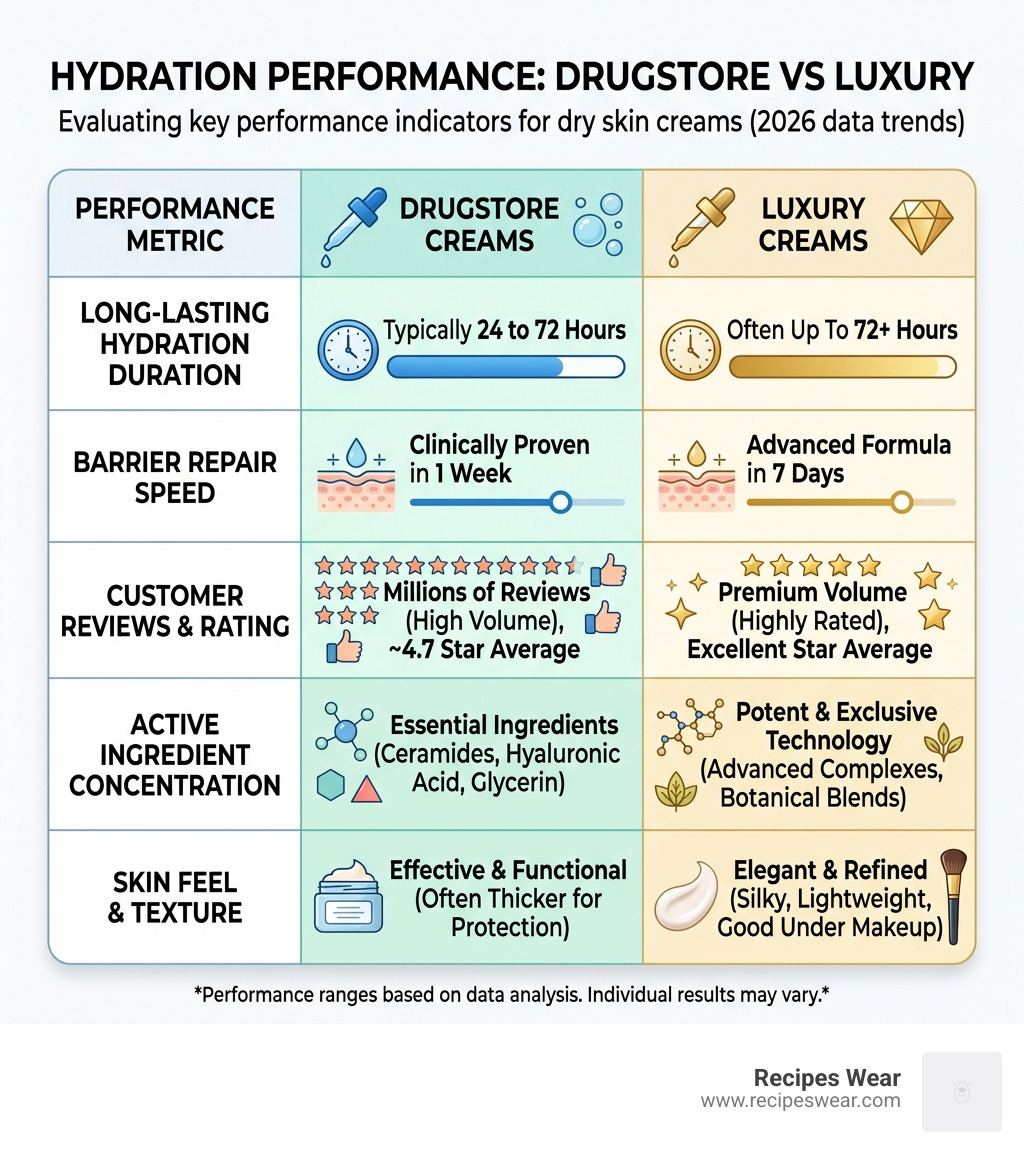
In 2026, we have more data than ever before to determine what actually works. Customer satisfaction is no longer just a guess; it’s backed by millions of reviews. When we evaluate the best skin care cream for dry skin, we look for products that provide at least 24 to 72 hours of hydration and have a proven track record of repairing the skin barrier within one week.
Best Skin Care Cream for Dry Skin: High-Performance Barrier Creams
The “gold standard” for intensive hydration often comes from brands that focus on clinical results.
- CeraVe Moisturizing Cream: This is a powerhouse with over 131,000 reviews and a 4.7-star rating. It uses MVE technology, which releases ceramides slowly over time, providing 72-hour hydration.
- La Roche-Posay Lipikar AP+: With over 32,000 reviews, this triple-repair cream is a favorite for those whose skin is so dry it actually hurts. It’s designed to rebalance the skin’s microbiome.
- Cetaphil Intensive Moisturizing Cream: This formula is clinically proven to restore the skin’s moisture barrier in just one week. It features a dermatologist-backed blend of niacinamide, panthenol (Vitamin B5), and glycerin.
Premium and Award-Winning Facial Moisturizers
Sometimes, your skin needs a bit more “TLC” than a basic drugstore cream can provide. Luxury brands often invest in advanced moisture-lock technologies and botanical infusions that provide a more elegant feel under makeup.
- La Mer Crème de La Mer: A perennial bestseller at Bluemercury with over 8,000 reviews. It’s famous for its “Miracle Broth” and its ability to provide deep, anti-aging hydration for the driest complexions.
- Kiehl’s Ultra Facial Cream: An award-winning favorite with over 8,300 reviews. It is uniquely lightweight yet provides 24-hour hydration, making it perfect for those who hate the feeling of a heavy, greasy cream on their face.
- First Aid Beauty Ultra Repair Cream: This is the ultimate “rescue” cream. It’s clinically proven to strengthen the skin barrier in just 7 days and is a top pick for those dealing with seasonal dryness or eczema.
Specialized Solutions for Sensitive and Acne-Prone Skin

One of the biggest mistakes we see is people with acne-prone skin skipping moisturizer because they fear it will cause breakouts. However, if your skin is too dry, it can actually produce more oil to compensate, leading to a vicious cycle of clogs and flakes.
The Non-Comedogenic Standard
If you have acne-prone dry skin, look for the word non-comedogenic. This means the product is specifically formulated not to clog pores. Many modern creams, like the CeraVe Intensive Moisturizing Cream, manage to be incredibly rich without being “heavy” or pore-clogging.
Fragrance-Free and Hypoallergenic
For our friends with sensitive skin, fragrance is the enemy. As one dermatologist famously put it, “Fragrance is like sugar—we crave it, but it’s bad for us.” Fragrances and certain botanicals are common allergens that can cause inflammation, which leads to more flakiness.
The National Eczema Association provides a “Seal of Acceptance” for products that meet their rigorous standards for hydration without irritation. Products like CeraVe – 12.0 oz Intensive Moisturizing Cream | Ulta Beauty and Advanced Radiance Cream for Dry Sensitive Skin | Cetaphil US are excellent examples of formulas that defend against the “five signs of skin sensitivity”: dryness, irritation, roughness, tightness, and a weakened barrier.
Choosing the Best Skin Care Cream for Dry Skin for Face vs. Body
The skin on your face is thinner and has more oil glands than the skin on your body. Because of this, the best skin care cream for dry skin on your face might be a lighter “lotion” or “gel-cream,” while your body needs a thick, rich “cream” or “ointment.”
- For the Face: Look for vitamins like B5 and E, and ensure it has SPF 30+ for daytime use.
- For the Body: Focus on heavy hitters like shea butter and lactic acid (which helps exfoliate dry flakes while hydrating).
- For Target Areas: For “pothole” areas like elbows, knees, and cracked heels, an ointment like Aquaphor is the #1 choice for locking in moisture.
How to Maximize Hydration: Application Tips and Routines
Buying the best skin care cream for dry skin is only half the battle. How you apply it matters just as much as what is in the jar.
The 3-Minute Rule
This is the most important tip we can give you: apply your moisturizer within three minutes of getting out of the shower. After bathing, your skin is hydrated but the water will evaporate quickly. Pat your skin dry so it is still slightly damp, then apply your cream. This traps that water into your skin.
Our Recommended 5-Step Routine for Dry Skin
- Cleanse: Use a soap-free, non-foaming cleanser.
- Tone: Use an alcohol-free toner with rose hydrosol or glycerin.
- Target: Apply a serum with hyaluronic acid.
- Moisturize: Apply your chosen rich cream (like Intensive Moisturizing Cream | CeraVe or Ultra Repair Cream Intense Hydration – First Aid Beauty ).
- Protect: In the morning, always finish with an SPF 30+.
Lifestyle Adjustments
- Lukewarm is Better: Hot water strips the natural oils from your skin. Keep your showers short (5-10 minutes) and use lukewarm water.
- Humidify: If you live in a dry climate or use a heater in the winter, a humidifier can add much-needed moisture back into the air, preventing your skin from drying out overnight.
- Nighttime Repair: Your skin does most of its healing while you sleep. Use a slightly thicker “night cream” or add a few drops of argan oil to your moisturizer for an extra boost.
Frequently Asked Questions about Dry Skin Creams
Why is my skin still dry even after I moisturize?
It’s a common frustration! There are several reasons this might happen:
- Genetics and Aging: As we age, our skin naturally produces fewer oils and ceramides.
- Harsh Products: You might be using soaps or toners with high alcohol content that strip your barrier.
- The “Water” Trap: Some lotions have very high water content. While they feel good initially, the water evaporates and can actually take your skin’s natural moisture with it. Switch to a thicker “cream” or “ointment.”
- Over-Exfoliation: Using too many acids (AHAs/BHAs) or physical scrubs can tear the skin barrier.
Is cream or lotion better for extremely dry skin?
For extremely dry skin, cream is almost always better than lotion. Lotions are thinner and contain more water and alcohol. Creams have a higher oil-to-water ratio, making them more effective at “plugging the gaps” in your skin barrier. For the driest areas like heels or elbows, an ointment (which is mostly oil/petrolatum) is the most powerful option for seasonal adjustments.
Are fragrance-free products better for dry skin?
Yes. Fragrances are one of the most common causes of contact dermatitis and skin irritation. When dry skin is irritated, it becomes inflamed, which makes it even harder for the skin to hold onto moisture. If you love a scent, try a limited-edition naturally scented version like the Ultra Repair Cream Warm Vanilla – First Aid Beauty , but generally, fragrance-free is the safest bet for clinical-grade hydration.
Conclusion
Finding the best skin care cream for dry skin doesn’t have to be a trial-and-error nightmare. By looking for “recipe” ingredients like ceramides, hyaluronic acid, and shea butter, and following a consistent routine, you can restore your skin’s radiance in as little as one week.
At Recipes Wear, we believe in “recipes that dress your creativity.” Whether you are looking for the latest 2026 beauty trends or a simple, budget-friendly routine, our goal is to help you feel comfortable in your own skin. Don’t forget to check out more of our Best Cream For Extremely Dry Skin – Amazon.com recommendations and Award Winning Facial Moisturizers For Dry Skin – Bluemercury for more luxury picks.
For more creative beauty recipes and Portuguese-inspired tips, visit us at More beauty recipes and tips. Stay hydrated!

