
The Ultimate Everyday Face Cream Guide for Healthy Skin
Why an Everyday Face Cream Is the Foundation of Healthy Skin
An everyday face cream is a daily moisturizer that keeps your skin hydrated, protected, and balanced — no matter your skin type. Here are the top-rated options worth knowing about:
| Face Cream | Best For | Key Ingredients |
|---|---|---|
| Vanicream Daily Facial Moisturizer | Sensitive skin | 5 ceramides, hyaluronic acid |
| La Roche-Posay Toleriane Double Repair | All skin types | Ceramides, niacinamide |
| CeraVe Moisturizing Cream | Dry, itchy skin | Ceramides, hyaluronic acid, MVE Technology |
| Cetaphil Deep Hydration Daily Cream | Dehydrated, sensitive skin | Niacinamide, vitamin B5, hyaluronic acid |
| CeraVe AM Moisturizing Lotion SPF 30 | Morning sun protection | Ceramides, zinc oxide, niacinamide |
A solid moisturizer is at the core of every great skincare routine. It reinforces your skin’s natural protective barrier, locks in hydration, and shields against environmental stressors that speed up aging and irritation.
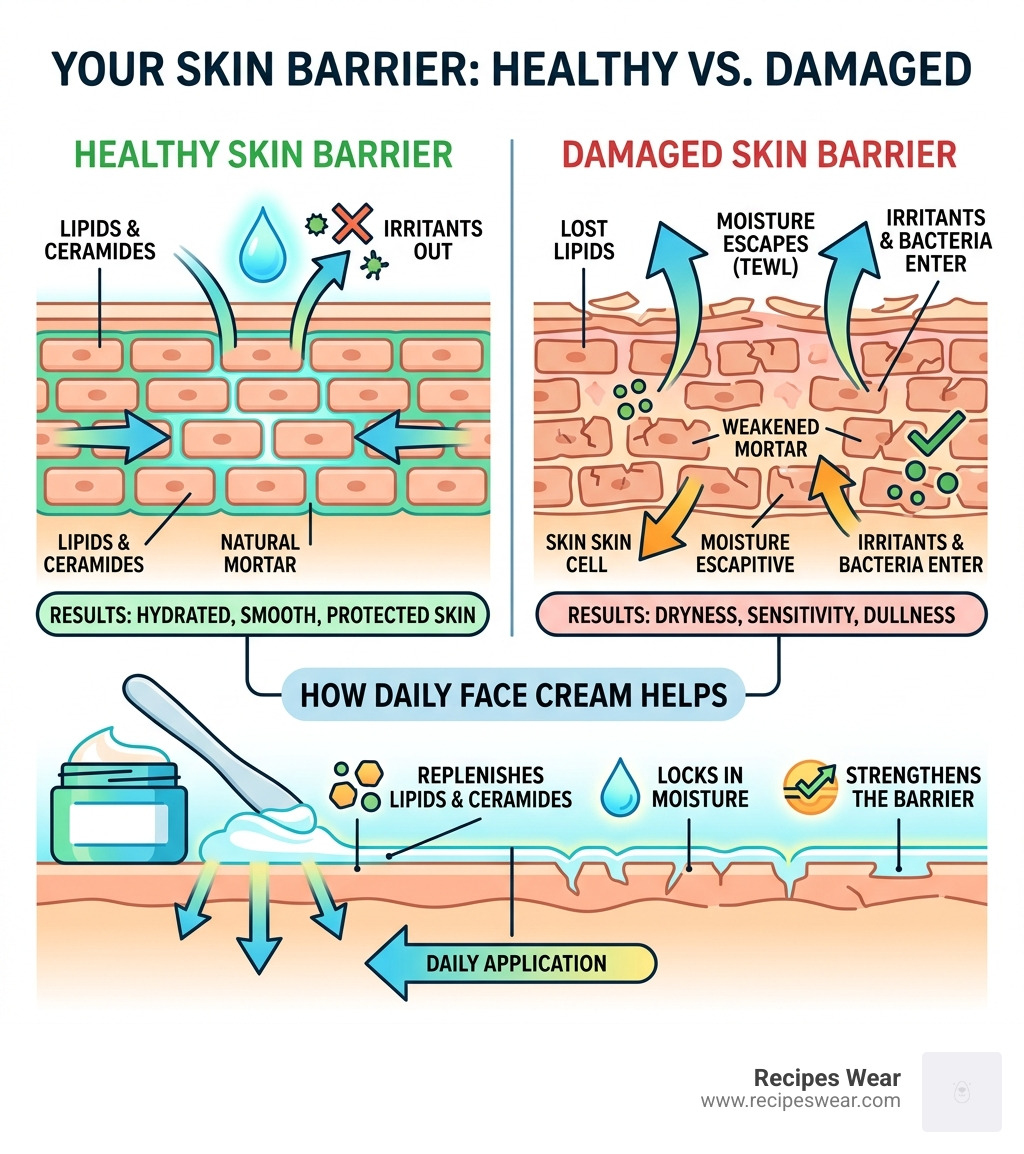
Think of your skin barrier like a brick wall. The bricks are your skin cells. The mortar holding them together? That’s where your face cream comes in. Without it, moisture escapes and irritants get in — leading to dryness, sensitivity, and dull skin over time.
The good news: finding the right everyday face cream doesn’t have to be complicated or expensive. Whether you have oily, dry, combination, or sensitive skin, there’s a formula designed for you — many of them available at your local drugstore.
This guide breaks down everything you need to know: the best ingredients to look for, how to pick the right formula for your skin type, and which products are worth your money.
The Science Behind Your Everyday Face Cream
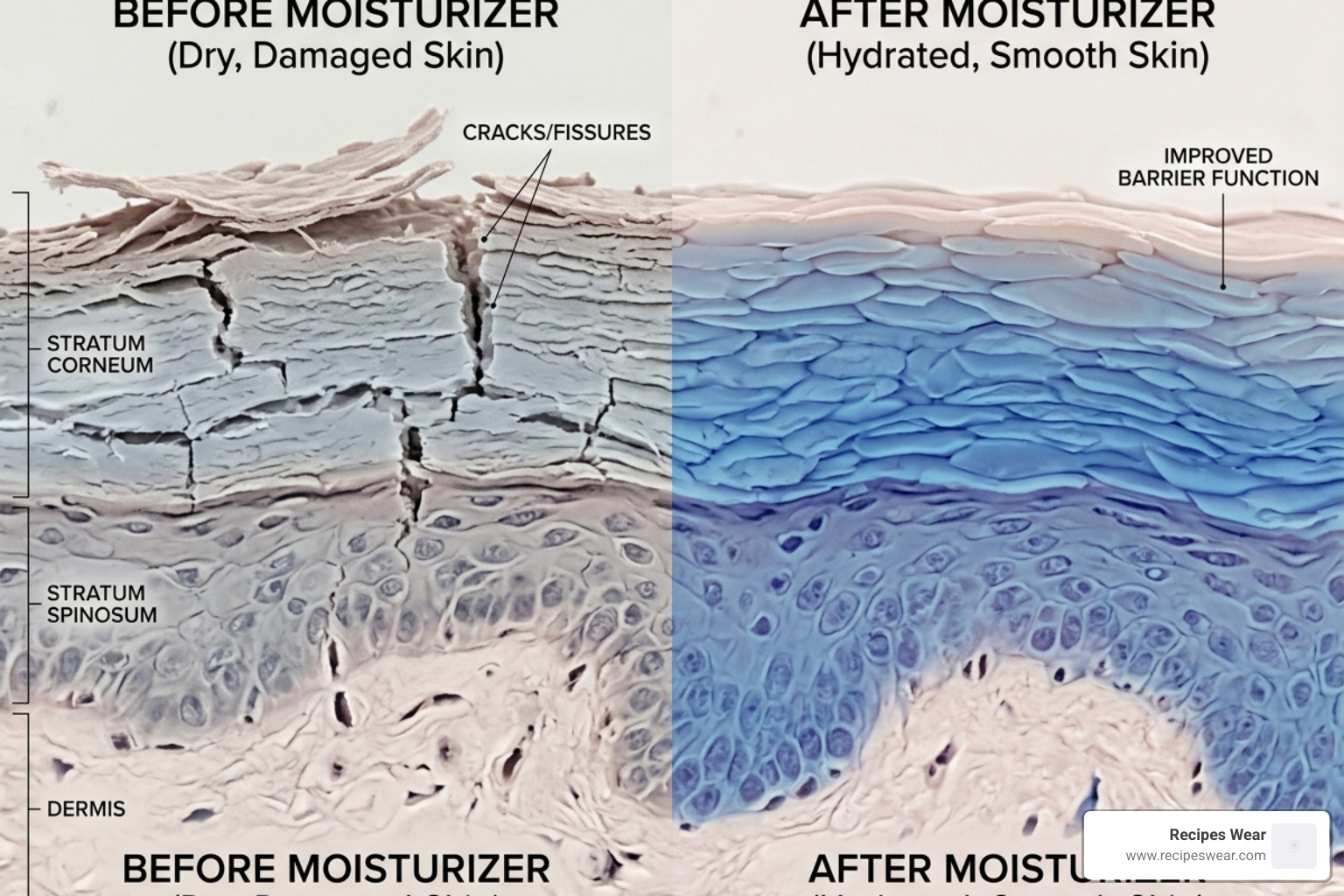
To understand why we need an everyday face cream, we have to look beneath the surface. Our skin is our largest organ, and its primary job is to act as a shield. At the very top layer sits the stratum corneum, often referred to as the “lipid bilayer.” This layer is composed of fatty acids, cholesterol, and ceramides that work together to keep the “good stuff” (water) in and the “bad stuff” (bacteria and pollution) out.
When this barrier is compromised by environmental stressors—like harsh winds, UV rays, or over-cleansing—we experience what scientists call Transepidermal Water Loss (TEWL). Essentially, the water in your skin evaporates into the air, leaving your face feeling tight, itchy, and looking dull.
An effective everyday face cream works by mimicking these natural lipids. By applying a moisturizer, we are reinforcing that “mortar” between our skin cells. This not only prevents TEWL but also maintains skin elasticity. When skin is properly hydrated, it remains plump and resilient. Without that moisture, fine lines become more visible, and the skin loses its ability to bounce back.
Choosing the Best Formula for Your Skin Type
Not all moisturizers are created equal. Using a heavy, oil-based cream on oily skin might lead to breakouts, while a lightweight gel might not be enough for someone battling chronic dryness. Here is how we recommend choosing based on your specific needs:
- Dry Skin: You need a rich, creamy texture. Look for “occlusives” like petrolatum or shea butter that create a physical seal on the skin to prevent moisture loss.
- Oily Skin: Don’t skip the moisturizer! Oily skin still needs water. Opt for oil-free, non-comedogenic (won’t clog pores) gel formulas that absorb quickly without leaving a greasy residue.
- Combination Skin: This is the “Goldilocks” of skin types. You likely need a lightweight lotion that hydrates the cheeks without overloading the T-zone.
- Acne-Prone Skin: Look for formulas containing niacinamide to calm redness and ensure the product is labeled “non-comedogenic.”
- Aging Skin: Seek out peptides and hyaluronic acid to help with plumping and supporting collagen production.
Understanding Moisturizer Categories
To choose the right product, it helps to know the three main types of moisturizing ingredients:
| Category | Function | Examples |
|---|---|---|
| Humectants | Pulls water into the skin | Hyaluronic Acid, Glycerin, Aloe Vera |
| Emollients | Smoothes the skin surface | Squalane, Ceramides, Jojoba Oil |
| Occlusives | Seals moisture in | Petrolatum, Dimethicone, Shea Butter |
Choosing an Everyday Face Cream for Sensitive Skin
If your skin turns red at the mere thought of a new product, you need a specialized everyday face cream. For sensitive types, “boring” is actually a compliment. We want formulas that are hypoallergenic, pH-balanced, and free of botanical extracts or essential oils, which are common hidden irritants.
Look for the National Eczema Association seal of approval on packaging. Brands like Vanicream are specifically designed for this, omitting common allergens and focusing on barrier-repairing ceramides. A good sensitive skin cream should provide immediate redness relief and feel soothing upon application.
The Benefits of an Everyday Face Cream with SPF
In April 2026, we know more than ever about the dangers of photoaging. UV rays are the #1 cause of premature wrinkles, dark spots, and skin cancer. This is why a morning everyday face cream with SPF is a non-negotiable multitasker.
Using a product like CeraVe AM Facial Moisturizing Lotion provides broad-spectrum protection while you hydrate.
- Mineral Filters: Use ingredients like Zinc Oxide to reflect UV rays off the skin. Modern “InVisibleZinc” technology means these no longer leave a thick white cast.
- Chemical Filters: Absorb UV rays and convert them into heat.
- The Verdict: The Skin Cancer Foundation recommends daily use of at least SPF 15 or 30 to prevent long-term damage.
Key Ingredients and Moisturizer Categories
When you flip over your moisturizer bottle, the ingredient list can look like a chemistry textbook. Here are the “superstars” we look for in a high-quality everyday face cream:
- Ceramides: These are lipids that make up 50% of the skin barrier. Products with multiple ceramides (like CeraVe Moisturizing Cream) help “repair” the barrier rather than just sitting on top of it.
- Hyaluronic Acid: A humectant that can hold 1,000 times its weight in water. It’s the secret to that “plump” look.
- Niacinamide (Vitamin B3): A versatile ingredient that calms inflammation, brightens skin, and regulates oil production.
- Glycerin: An old-school but incredibly effective humectant that draws moisture from the air into your skin.
- Peptides: Short chains of amino acids that act as building blocks for proteins like collagen and elastin.
- Squalane: A stable, skin-identical oil that provides deep emollience without feeling heavy.
- Time-Release Delivery (MVE Technology): Some advanced creams use delivery systems to release hydration slowly over 24 hours, ensuring your skin doesn’t dry out by lunchtime.

How to Identify High-Quality Daily Moisturizers
Price doesn’t always equal quality. In everyday face cream, some of the best-performing products are found in the drugstore aisle. For instance, the Amazon Best Sellers list is frequently topped by affordable brands like Vanicream and La Roche-Posay.
What to look for:
- Clinical Testing: High-quality brands will often cite clinical studies. For example, Clinique Moisture Surge claims 100 hours of auto-replenishing hydration.
- Packaging: Creams in pumps or tubes often stay “fresh” longer than those in jars, as they are less exposed to air and bacteria from your fingers.
- Antioxidants: Look for vitamins C or E, or botanical extracts like Centella Asiatica (Cica), which help fight off environmental damage throughout the day.
- Long-Lasting Claims: While “48-hour hydration” sounds like marketing fluff, it often indicates the presence of occlusives and time-release technologies that provide a lasting moisture reservoir.
How to Apply Face Cream for Maximum Efficacy
You’ve bought the perfect everyday face cream—now, let’s make sure you’re using it correctly. Most of us just “slap it on,” but a few small tweaks can double the results.
- Cleanse First: Always start with a clean canvas. Use a gentle cleanser to remove dirt and oil.
- Layer Wisely: If you use serums, apply them before your moisturizer. The rule of thumb is to go from thinnest to thickest consistency.
- The “Damp Skin” Rule: Apply your cream while your skin is still slightly damp from washing. This helps humectants like hyaluronic acid “trap” that extra water into your skin.
- Dosage: A nickel-sized amount is usually enough for the face.
- Massage Technique: Use gentle, upward strokes. This prevents pulling on the skin and can help with lymphatic drainage, reducing puffiness.
- Don’t Forget the Neck: Your neck and décolleté (chest area) show signs of aging just as fast as your face. Always extend your everyday face cream downward!
- Morning vs. Night: In the morning, follow up with (or use a cream containing) SPF. At night, you can use a richer formula, like CeraVe PM Facial Moisturizing Lotion, to support the skin’s natural repair cycle while you sleep.
Frequently Asked Questions about Daily Moisturizing
What is the difference between hydration and moisturization?
This is the most common confusion in skincare! Hydration refers to the water content inside the cells (think: plumpness). Moisturization refers to the skin’s ability to trap that water and provide a smooth surface (think: softness). If your skin is dull and has fine lines, it’s likely dehydrated (needs water). If it’s flaky and rough, it’s likely dry (needs oil/lipids). A product like Cetaphil Deep Hydration Healthy Glow Daily Cream is designed to address both needs simultaneously.
Can I use my body moisturizer on my face?
Technically, yes, if the bottle says “Face and Body” (like the CeraVe Moisturizing Cream). However, many body lotions are much thicker and contain ingredients like heavy fragrances or cocoa butter that can clog facial pores. The skin on your face is thinner and more sensitive than the skin on your legs, so unless the product is specifically formulated for both, it’s safer to stick to a dedicated everyday face cream.
What happens if I stop using face cream regularly?
Consistency is key. If you stop moisturizing, your skin barrier weakens. This can lead to a “rebound” effect where oily skin produces even more oil to compensate for the dryness, leading to breakouts. For dry skin types, you’ll notice increased redness, sensitivity, and a faster appearance of fine lines. Regular use of a moisturizer is essentially “insurance” for your skin’s future.
Conclusion
Finding your perfect everyday face cream is one of the kindest things you can do for your skin. It’s not just about vanity; it’s about maintaining the health of your body’s first line of defense. Whether you opt for a luxury botanical blend like the Joanna Vargas Daily Hydrating Cream or a trusted drugstore staple, the best cream is the one you enjoy using every single day.
At Recipes Wear, we believe beauty should be as creative and nourishing as your favorite meal. By choosing the right “ingredients” for your skincare routine, you’re dressing your skin for success and long-term health.
Ready to level up your beauty game? Explore more expert tips and creative “recipes” for your routine at Recipes Wear.

