The Ultimate Beginner Guide to Basic Makeup
Why a Basic Makeup Routine for Beginners Changes Everything
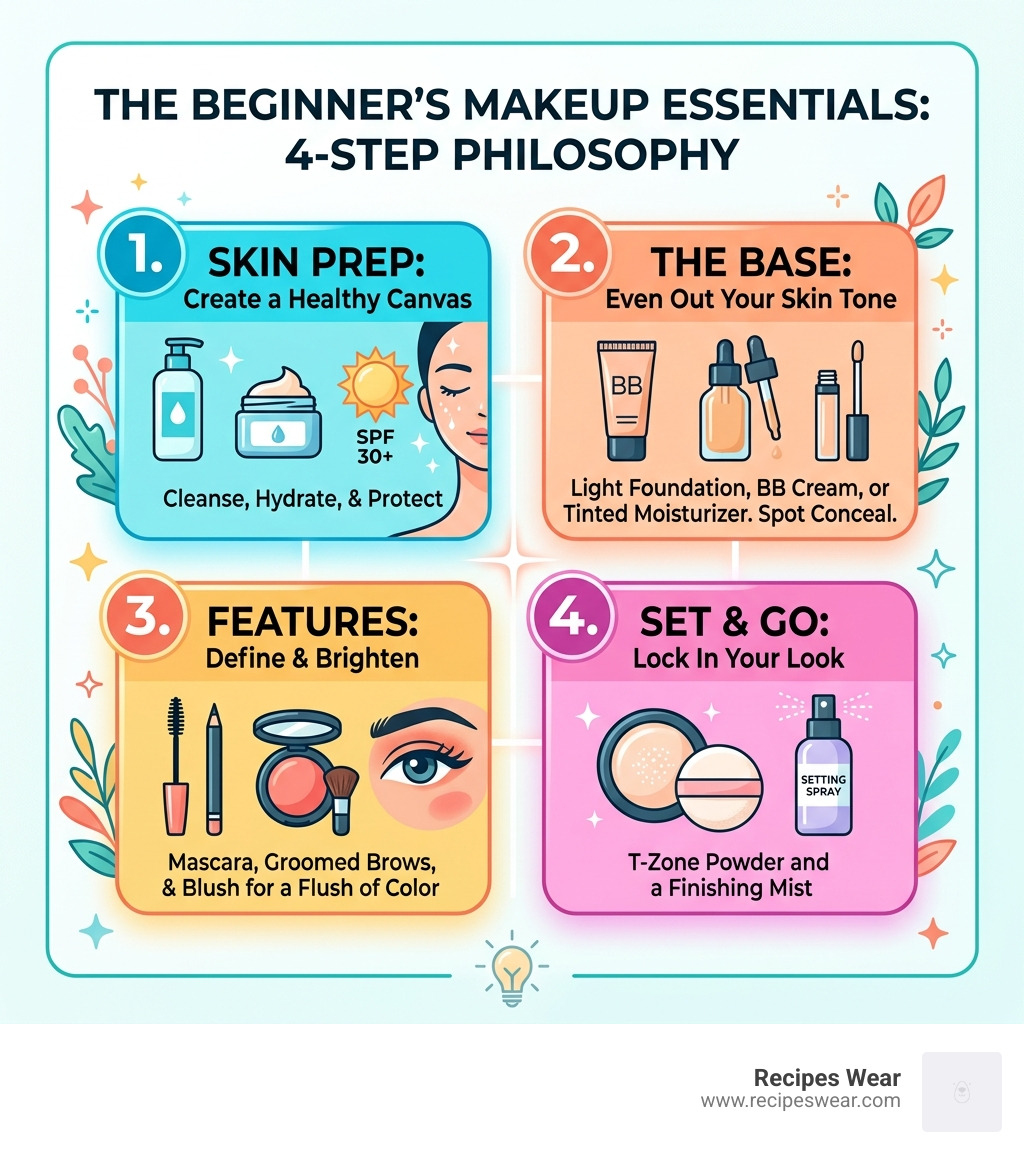
A basic makeup routine for beginners doesn’t have to be complicated — here’s the simplest version to get you started right now:
- Prep your skin — cleanse, moisturize, and apply SPF 30+
- Apply a light base — tinted moisturizer, BB cream, or light foundation
- Spot conceal — under eyes and any blemishes only
- Define your features — a coat of mascara, groomed brows, and a swipe of blush
- Set and go — a light dusting of powder on your T-zone, finished with setting spray
That’s it. Five steps. Fifteen minutes or less once you’ve practiced a few times.
Starting makeup can feel overwhelming. There are hundreds of products, thousands of tutorials, and a lot of conflicting advice online. Most of that content pushes complex techniques and full product hauls before you’ve even learned the basics.
Here’s the truth: it’s not the products that make the difference — it’s the technique.
Many beginners spend years feeling defeated trying to copy tutorials that weren’t built for their skin type or skill level. The good news? A simple, repeatable routine built on a handful of products is all you need to look polished and feel confident — in under 15 minutes.
This guide is built around skill-building first. You’ll learn what actually matters, in the right order, without the overwhelm.
Understanding Your Canvas: Skin Type and Preparation
Before we even touch a makeup brush, we have to talk about the “canvas.” In beauty in April 2026, we’ve moved away from the idea that makeup is meant to mask the skin. Instead, we use it to enhance a healthy base. If your skin isn’t prepped, even the most expensive foundation will look patchy or “cakey.”
Determining Your Skin Type
Knowing your skin type is the first step in choosing products that won’t slide off your face by noon.
- Oily: Your skin looks shiny, especially in the T-zone (forehead, nose, and chin), and you may have enlarged pores.
- Dry: Your skin feels tight, may have flaky patches, and often looks dull.
- Combination: You’re oily in the T-zone but dry or “normal” on your cheeks.
- Mature: You may notice fine lines or a loss of elasticity; your skin likely needs extra hydration.
The Prep Routine
We recommend a three-step preparation before any makeup touches your face. First, cleanse with a gentle wash to remove overnight oils. Second, moisturize. Even if you have oily skin, skipping moisturizer can cause your skin to produce more oil to compensate. Finally, apply SPF 30+. As we like to say, SPF is your real-life filter; it protects your skin from premature aging and damage.
The Primer Debate: Is it Necessary?
According to Makeup for Beginners: An Easy 4-Step Application – Natalie Setareh, primers aren’t always essential if your skincare is solid. However, they can help with specific concerns. A pore-blurring primer is great for oily skin to create a smooth surface, while a hydrating primer provides a dewy base for dry skin. If you’re just starting, skip this until you’re comfortable with the basics.

The Essential Toolkit for a Basic Makeup Routine for Beginners
You don’t need a 20-piece brush set to look great. In fact, many professionals use their fingers for a more natural finish! However, having a few key tools makes blending much easier.
| Tool | Best Used For | Why Beginners Love It |
|---|---|---|
| Damp Beauty Sponge | Foundation & Concealer | Provides a streak-free, airbrushed finish. |
| Foundation Brush | Liquid/Cream Bases | Offers more coverage than a sponge or fingers. |
| Fluffy Powder Brush | Setting Powder | Distributes powder lightly so you don’t look “dusty.” |
| Angled Blush Brush | Blush & Bronzer | Fits the contours of your cheekbones perfectly. |
| Spoolie | Brows & Lashes | Brushes through brow hairs for a natural look. |
Building a Minimalist Starter Kit
When shopping for your first kit, look for Makeup Essentials for Beginners. You’ll want a light base (like a BB cream), a concealer, a brow gel, mascara, a neutral blush, and a tinted lip balm. Drugstore brands have improved massively by 2026, so you can easily build a high-quality starter kit for $50-$80.
Step-by-Step: Mastering Your Application
Now for the fun part! The order of operations matters because it helps products blend into each other rather than sitting on top of one another.
1. Foundation Matching and Application
The biggest mistake beginners make is matching foundation to their arm. Your arm is rarely the same color as your face! Instead, use the jawline test. Swipe three shades that look close to your skin tone along your jawline; the one that “disappears” in natural light is your winner.
Pro Tip: Pay attention to your undertones. If you burn easily and have blue veins, you’re likely “Cool.” If you tan easily and have greenish veins, you’re “Warm.” If you’re somewhere in between, you’re “Neutral.”
2. Concealer Placement
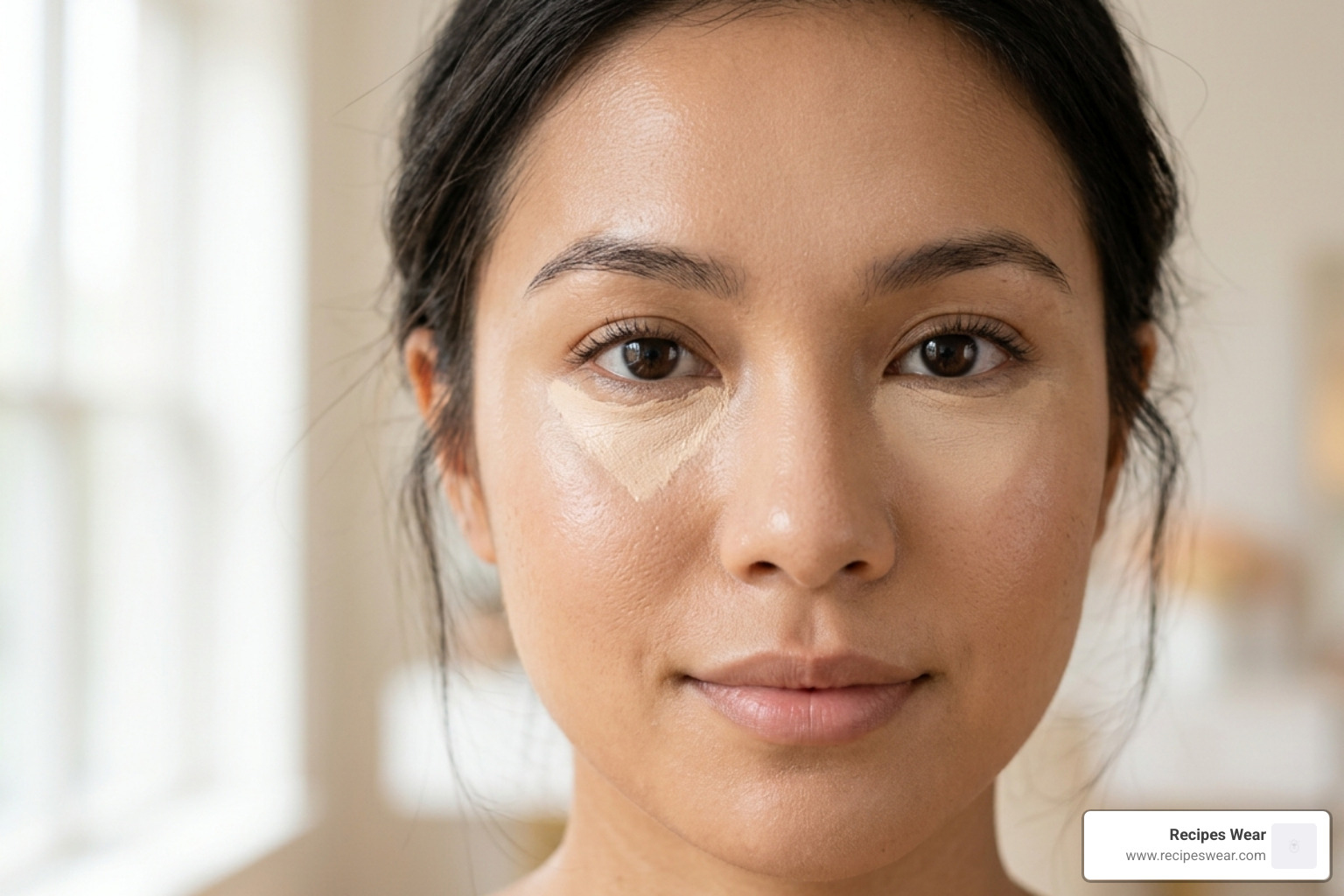
You don’t need to paint your whole face with concealer. Apply it in an inverted triangle under your eyes to brighten the area, and dab a tiny amount on any red spots or blemishes. Use a damp sponge to tap (don’t rub!) the product into your skin.
3. Strategic Powdering
Only apply powder where you actually get oily. For most of us, that’s the T-zone. Use a small, fluffy brush to lightly dust translucent powder over your forehead, nose, and chin. This prevents the “cakey” look while still locking your makeup in place. For a visual guide on these steps, check out this 5 Minute Makeup Routine For Beginners.
Mastering the Base in a Basic Makeup Routine for Beginners
For a basic makeup routine for beginners, we often recommend a BB cream or tinted moisturizer over a heavy liquid foundation. These are much more forgiving if you haven’t mastered blending yet.
- Blending Techniques: Always blend from the center of your face outwards.
- The Neck Rule: Never stop at the jawline! Drag whatever is left on your sponge or brush down your neck to avoid the dreaded “makeup mask” look.
- Natural Light Check: Before you leave the house, check your reflection in natural light (like near a window). Bathroom lights can be very deceptive!
Defining Features in a Basic Makeup Routine for Beginners
Once your base is set, it’s time to bring some life back to your face.
- Brows: Use a pencil to draw tiny, hair-like strokes in sparse areas. Follow your natural brow map—don’t try to create a brand-new shape on day one.
- Eyes: For a simple look, “tightline” your upper lash line with a brown pencil. This makes your lashes look thicker without the struggle of a winged liner.
- Mascara: Wiggle the wand at the base of your lashes and sweep upward. Avoid “pumping” the wand in the tube, as this pushes air in and dries out the formula.
- Blush and Bronzer: Apply bronzer in a “3” shape—starting at the temple, curving under the cheekbone, and finishing along the jawline. For blush, smile and apply to the “apples” of your cheeks, blending upward toward your temples.
- Lips: Beginners often feel most comfortable with a nude lip shade or a lip balm stain. It’s low-maintenance and doesn’t require a lip liner to look polished.
Pro Tips for Longevity and Avoiding Common Mistakes
We want your basic makeup routine for beginners to last from your morning coffee until your evening wind-down.
- The Setting Spray Sandwich: If you have a long day ahead, spray your face after your moisturizer, and then again once your makeup is finished. This “sandwiches” the makeup between layers of grip.
- Fixing “Cakey” Foundation: If you’ve applied too much, don’t panic! Lightly mist your face with water or a hydrating spray and gently press a clean, damp sponge over the area to soak up the excess.
- Expiry Dates: Makeup doesn’t last forever. Your mascara should be replaced every 3 months to avoid eye infections. Liquid foundations usually last 6–12 months, while powders can last up to 2 years.
- Hygiene: Wash your brushes at least once a week with a gentle soap. Dirty brushes harbor bacteria that can lead to breakouts.
- Double Cleansing: At the end of the day, use an oil-based cleanser followed by your regular water-based cleanser. This ensures every bit of SPF and makeup is removed.
Frequently Asked Questions about Beginner Makeup
How long does a simple beginner makeup routine take?
When you’re first starting, expect it to take about 30 minutes as you learn where things go. However, once you develop muscle memory, a basic makeup routine for beginners should only take 10 to 15 minutes. On busy mornings, you can even strip it down to a 5-minute “rush” routine: BB cream, mascara, brow gel, and lip tint.
How do I choose the right foundation and concealer shades?
Always match to your neck and jawline, not your hand. In 2026, many brands offer “flashback-free” formulas, but it’s still wise to avoid heavy silica-based powders if you’re going to be in flash photography. If you’re unsure between two shades, go for the lighter one; you can always add warmth with bronzer, but a too-dark foundation is much harder to fix.
Is it okay to skip foundation every day?
Absolutely! Many people prefer a concealer-only look. This involves spot-concealing redness or blemishes and leaving the rest of the skin bare. It’s a great way to let your skin breathe and is often the healthiest choice for acne-prone skin.
Conclusion
At Recipes Wear, we believe that beauty should be as creative and personalized as your favorite meal. Our “recipes that dress your creativity” are designed to give you the ingredients you need to feel like the best version of yourself.
Makeup is a skill, not a talent. It takes practice, a little bit of patience, and the willingness to wipe it all off and try again. Don’t worry about being perfect; focus on what makes you feel confident.
Ready to take the next step? Start your beauty journey with us and discover more tips for skincare, hair care, and creative makeup tutorials!

