
Why Your Skin Craves a Quality Face Care Cream Every Day
Why Your Skin Needs a Face Care Cream Every Single Day
Face care cream is a daily moisturizer that hydrates your skin, repairs its protective barrier, and shields it from environmental damage. Here’s a quick look at what you need to know:
- What it does: Locks in moisture, restores your skin barrier, and keeps skin soft and healthy
- Key ingredients to look for: Ceramides, hyaluronic acid, niacinamide, vitamin C, and retinol
- Who needs it: Everyone – regardless of skin type, including oily and combination skin
- When to apply: Morning and night, after cleansing and any serums
- What to prioritize: Fragrance-free options, barrier-supporting ingredients, and textures that suit your skin type
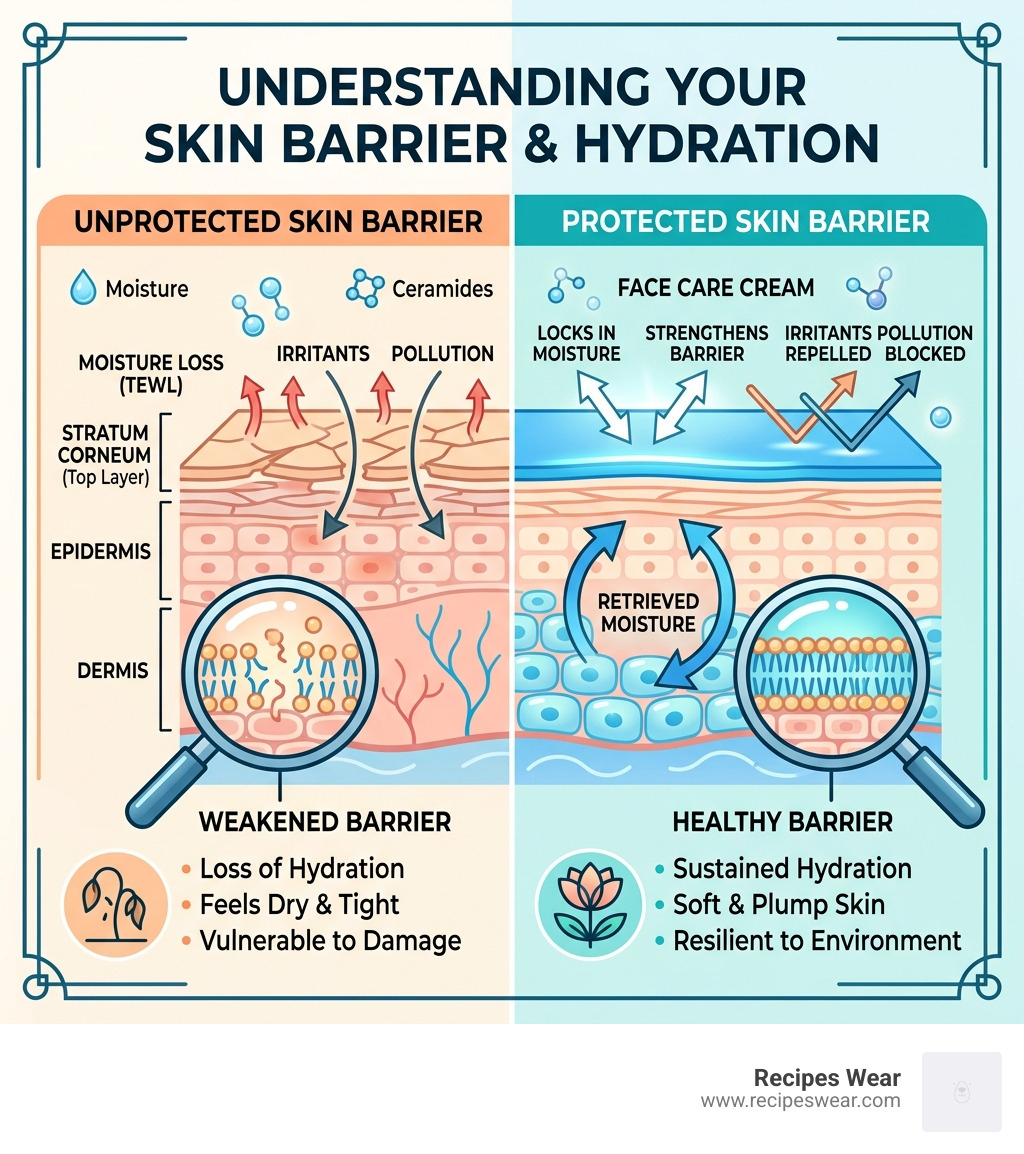
Your skin loses moisture every day. Heating, air conditioning, sun exposure, and even just washing your face all chip away at your skin’s natural protective layer.
That layer – called the skin barrier – is what keeps moisture in and irritants out. When it’s weakened, skin feels tight, looks dull, and becomes more reactive.
A good face care cream does two things well. It replenishes moisture and helps rebuild that barrier. Think of it like a daily reset for your skin.
The good news? You don’t need a complicated 10-step routine. Even a simple, well-chosen cream used consistently can make a real difference in how your skin looks and feels over time.
The Essential Role of a Face Care Cream in Your Routine
Have you ever noticed how your skin feels a bit “crunchy” after a long flight or a day in the sun? That’s your skin screaming for help. In our journey at Recipes Wear to find the perfect “skin recipes,” we’ve learned that a face care cream is far more than just a luxury—it is the structural glue of your skincare routine.
As of April 2026, the gold standard for healthy skin isn’t just about looking shiny; it’s about barrier health. Your skin is constantly fighting a battle against Transepidermal Water Loss (TEWL). This fancy term basically means the water inside your skin is trying to evaporate into the air. Without a quality cream to act as a seal, that water escapes, leaving your cells shriveled and prone to irritation.
A high-quality face care cream provides lipid replenishment. It delivers the fats and oils your skin needs to stay “plump.” When we apply these creams, we aren’t just making the surface soft; we are actively supporting Scientific research on barrier restoration and lipid replenishment that shows how consistent topical application can reduce inflammation and prevent premature aging.
Key Ingredients That Define High-Performance Formulas
When you are browsing skincare aisles or online shops, the ingredient list can look like a chemistry textbook. Don’t panic! We’ve broken down the “superfood” ingredients that make a face care cream actually work.
- Niacinamide (Vitamin B3): This is the ultimate multitasker. It calms redness, minimizes the appearance of pores, and helps regulate oil production.
- PDRN (Polydeoxyribonucleotide): A rising star in April 2026, often found in advanced skincare formulas. It is derived from salmon DNA and is known for its tissue-repair support.
- Bakuchiol: If you want the anti-aging benefits associated with retinol but have sensitive skin, this plant-based alternative is a gentler option often suitable for daytime use.
- Vitamin C: Essential for brightening dark spots and protecting against pollution.
- Collagen: While large collagen molecules often sit on top of the skin, they provide excellent surface hydration and a temporary “lifted” look.
For those of us with reactive skin, finding the right balance is key. You can dive deeper into Scientific research on sensitive skin hydration and ingredient efficacy to see why certain “clean” ingredients are winning the market this year.
Why Hyaluronic Acid is a Must-Have in Your Face Care Cream
Hyaluronic acid is a humectant, which is a fancy way of saying it is a moisture magnet. It can hold up to 1,000 times its weight in water. When included in a face care cream, it pulls moisture from the air and into your skin.
Many top-rated products use specialized versions of this molecule to provide long-lasting hydration. It gives you that instant plumping effect that can make fine lines look softer for a few hours.
The Power of Ceramides for Barrier Defense
If hyaluronic acid is the water, ceramides are the mortar between the bricks of your skin cells. They are lipids (fats) that make up over 50% of the skin’s composition. Many barrier-focused formulas use essential ceramides to help restore the skin’s natural protective barrier. Without them, your skin becomes a “leaky bucket,” losing moisture no matter how much water you drink.
Tailoring Your Selection to Specific Skin Needs
Not all faces are created equal, and neither are all creams. Using a heavy, oil-based cream on acne-prone skin can increase the chance of feeling greasy, while a light gel might leave dry skin feeling thirsty.
| Skin Type | Recommended Texture | Key Features |
|---|---|---|
| Dry | Rich Cream / Ointment | Contains petrolatum, shea butter, or heavy oils to lock in moisture. |
| Oily | Lightweight Gel / Lotion | Oil-free, non-comedogenic (won’t clog pores), and matte finish. |
| Sensitive | Hypoallergenic Cream | Fragrance-free, paraben-free, and minimal ingredients to avoid irritation. |
| Combination | Lightweight Cream | Hydrating but breathable; can be layered more heavily on dry patches. |
| Acne-Prone | Oil-Free Lotion | Often contains niacinamide or salicylic acid to treat while hydrating. |
For those on a budget, you do not have to spend a fortune. Many simple, fragrance-free moisturizers with barrier-supporting ingredients can be effective for sensitive skin while remaining affordable.
Global Innovations: Western Science vs. Korean Beauty
The world of face care cream is currently shaped by two exciting philosophies.
Western Skincare tends to focus on clinical results and “fixing” problems. These formulas are often dermatologist-developed, fragrance-free, and aimed at barrier repair or intensive anti-aging support. They are the “workhorses” of the industry.
Korean Beauty (K-Beauty) often focuses on “skin food” and the “glass skin” aesthetic. These creams may include innovative ingredients like fermented essences, snail mucin, or blue daisy extract. K-beauty encourages layered hydration – applying multiple thin layers of moisture rather than one thick layer of cream.
In 2026, we are seeing a beautiful “fusion” where Western formulas are adopting gentler, hydrating textures, and Korean-inspired products are incorporating high-potency actives like stabilized Vitamin C and retinol.
Perfecting Your Routine with a Targeted Face Care Cream
Applying your face care cream isn’t just about slapping it on and hoping for the best. Technique matters!
- The Damp Skin Method: Never apply cream to bone-dry skin. After washing, pat your face with a towel so it’s still slightly damp. This helps the cream trap that extra water on the surface.
- The Upward Motion: Gravity is already pulling your skin down; don’t help it! Massage your cream in upward, circular motions to stimulate blood flow.
- Don’t Forget the Neck: Your neck and chest (décolletage) show age faster than your face because the skin is thinner. Always extend your cream downwards.
How to Layer Your Face Care Cream for Maximum Absorption
The golden rule of skincare layering is: Thinnest to Thickest.
- Step 1: Cleanse. Remove the day’s grime.
- Step 2: Tone. Balance the skin’s pH.
- Step 3: Serum. Apply your targeted treatments (like Vitamin C or Hyaluronic Acid serums).
- Step 4: Face Care Cream. This “seals” everything in.
- Step 5: Protect. In the morning, always finish with SPF.
Frequently Asked Questions about Facial Hydration
Should I use a face cream with SPF or a separate sunscreen?
This is a classic debate. A face care cream with built-in SPF 30 is great for convenience and ensures you are getting some protection every day. However, most people don’t apply enough moisturizer to get the full SPF rating listed on the bottle. For long days outdoors in April 2026, we recommend using a dedicated sunscreen as your final step for maximum broad-spectrum protection.
What is the difference between hydration and moisturization?
It sounds like the same thing, but it’s not!
- Hydration refers to the water content within the cells (think: drinking water).
- Moisturization refers to the skin’s ability to trap that water and prevent it from escaping (think: the seal on a bottle). If your skin is tight and dull, you need hydration (humectants like Hyaluronic Acid). If your skin is flaky and rough, you need moisturization (emollients like ceramides or oils).
Can I use the same cream for day and night?
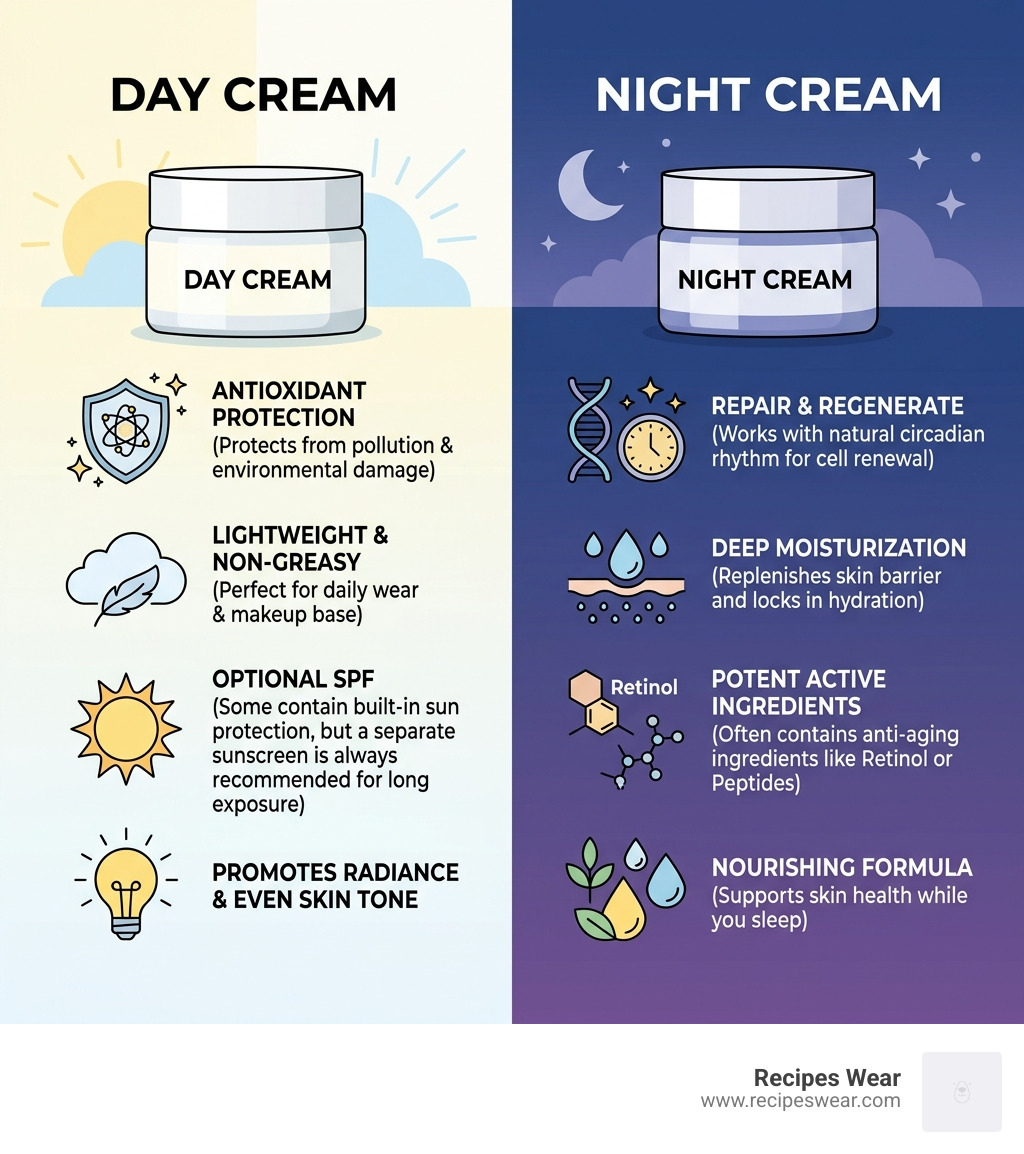
You can, but your skin has different needs during the day versus the night.
- Day creams are usually lightweight and contain antioxidants to protect you from pollution and sun.
- Night creams are often richer and contain repair-focused ingredients like retinol or peptides that work with your body’s natural circadian rhythm to support overnight renewal.
Conclusion
At Recipes Wear, we believe that taking care of your skin is a form of creative expression. Just like a chef selects the finest ingredients for a signature dish, you should choose a face care cream that nourishes your unique skin “recipe.” Whether you are looking for the clinical precision of Western brands or the innovative glow of K-beauty, the most important step is consistency.
Your skin works hard for you every day—give it the hydration and protection it craves. For more creative “skin recipes” and More beauty tips and creative recipes, stay tuned to our latest updates!
Note: Always perform a patch test when trying a new face care cream to ensure your skin loves the “recipe” as much as you do!

